
Every job starts with a walk-through at your home.
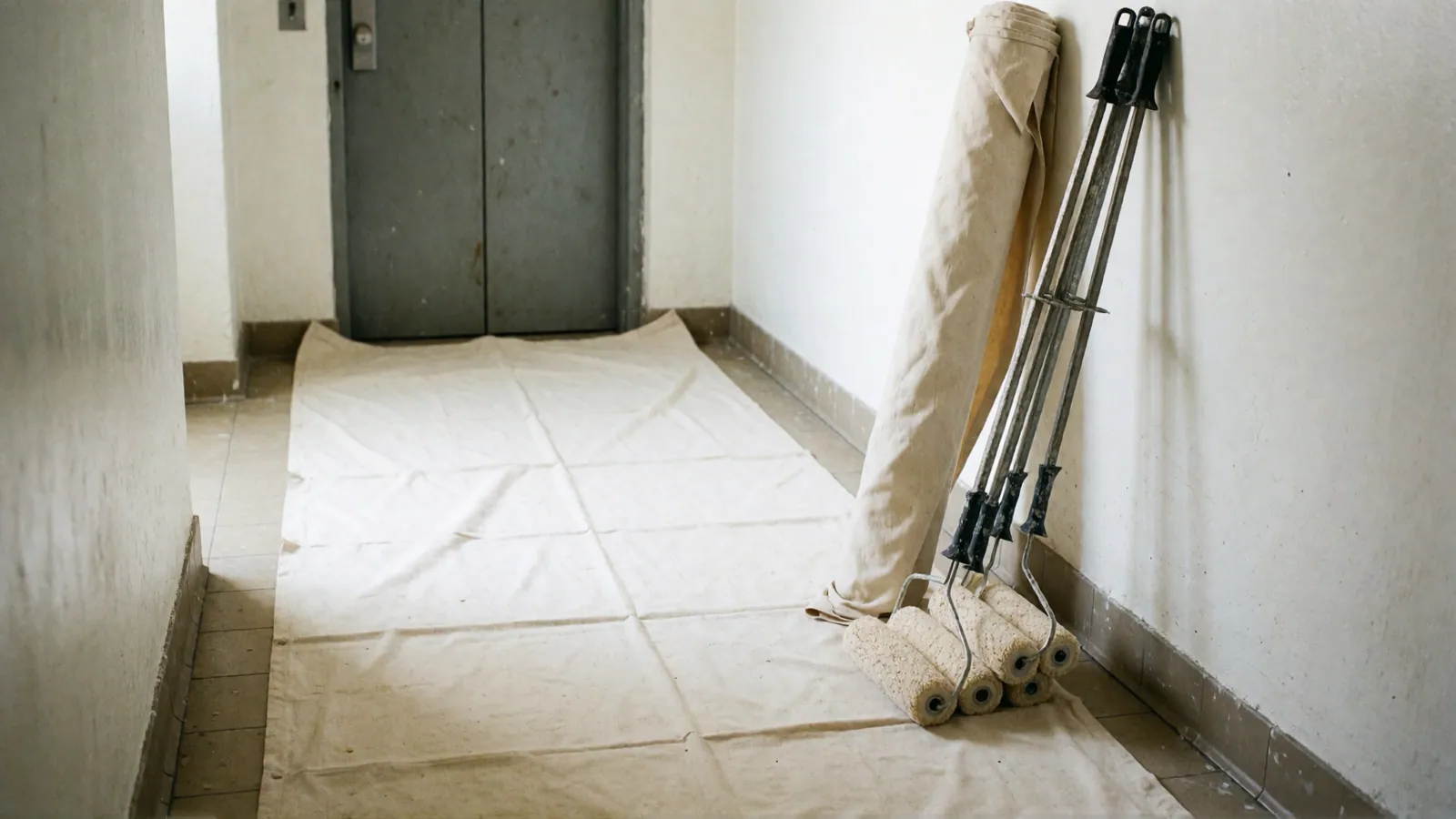
The ground-floor hall of an apartment building: a canvas drop cloth laid along the tiled floor to a gray steel elevator door, a rolled drop cloth and three rollers on their frames leaning against the wall.

Getting ready

The certificate, the agreement and the building's hours

What a building asks of a painter is its own rule, not the City's, and every building words it differently. Ask early, and ask in writing.

  • The building's rule, not a law
  • The service elevator, first and last day

AI-generated illustration. Not a real home or business.

The certificate of insurance

Many co-ops, condos and managed buildings ask a painter for a certificate of insurance naming the building and its managing agent before anyone may start, and an alteration agreement for bigger jobs. A real painter's insurer issues the certificate; ask the managing agent exactly what it must say, a week or more ahead. It is the building's rule, not a law. This demonstration company holds no insurance, so it has no certificate to send.

A certificate of insurance is a one-page form a contractor's insurer issues, naming the building, and often its managing agent, as the holder. A managing agent asks for one because a scraped elevator cab or a spattered lobby floor is the building's to put right, and the certificate tells the agent whose insurer to send the bill to.

The wording belongs to the building: its legal name, the managing agent's name as well, sometimes a co-op corporation's name that appears nowhere on the door. Ask for it in writing and pass it on exactly as written. A certificate with the wrong name on it is sent back, and the job waits for the right one.

A small steel cup of white paint on a window sill with a foam brush resting across it.AI-generated illustration. Not a real home or business.

Rowan Takahashi-Bell

Office coordinator

Books the walk-throughs and asks each building for its rules.

Rowan asks the managing agent for the building's working hours before anyone asks the painters.

Rowan books the service elevator for the first and the last day of every job.

The picture is a still of the tools, not a portrait.

Why this company sends none

This company has no insurance, no bond and no workers' compensation policy, because it does not exist. A real contractor names its insurer in the contract, and where an ad says insured or bonded, New York City asks it to say what kind.

So the paragraphs above are advice for hiring a real painter: ask for the certificate before the contract is signed, and check that the insurer it names is the one the contract names.

The alteration agreement

Some co-ops and condos ask for an alteration agreement before a bigger job. It is a document between you and the building, not between you and the painter, and it sets the conditions for work in the apartment: the days and the hours, how the hall and the elevator are protected, and sometimes who has to approve the work before a date can be set.

Whether a job needs one is the building's call. Ask the managing agent about the job you have in mind, rooms and all, before the walk-through, because an approval the building needs first can move the start date further than anything else on this page.

The working hours and the elevator

Many buildings allow work only on weekdays, often from nine to five, and want the service elevator booked and the hall protected. The building's rules win, and a shorter day on site is planned for at the walk-through.

Two days need the elevator. The office books the service elevator with the super for the first and the last day, when the drop cloths, the plastic and the paint come and go. All we need from you is the super's or the managing agent's telephone number.

The painters' own day runs from 8 am to 4 pm. Where a building's day starts later or ends earlier, the walk-through counts the difference: the painter-hours a job takes stay the same, so a shorter day on site means more working days to fit them in.

What to ask the managing agent

This is practice, not law: each building sets its own rules, and two buildings on one block can ask for different things.

  1. Does the building want a certificate of insurance, and in whose names?

    The exact legal names to put on it, the address, and how far ahead of the first day it has to arrive.

  2. Does this job need an alteration agreement?

    And whether the board or the managing agent has to approve the work before a date is set.

  3. What are the working days and hours?

    When the painters may arrive, when they must be out, and whether there are days the building allows no work at all.

  4. Which elevator, and how is it booked?

    Whether there is a service elevator, how far ahead it is reserved, and whether it must be padded, and by whom.

  5. How should the hall be protected?

    Some buildings want runners from the elevator to the door, or the apartment door kept closed while the work goes on.

  6. Where may brushes and rollers be washed?

    Some buildings do not want paint water poured down an apartment's sinks, and say where it goes instead.

Plan your painting

Try the scope planner: a crew, painter-hours and working days at the published rate, in about two minutes. Sending it to us books nothing.