How it works
A planning range, a walk-through, then a written contract
Three different things, in the order you meet them: what the planner prints from your answers, what a walk-through at your home sees, and the contract that carries the price.
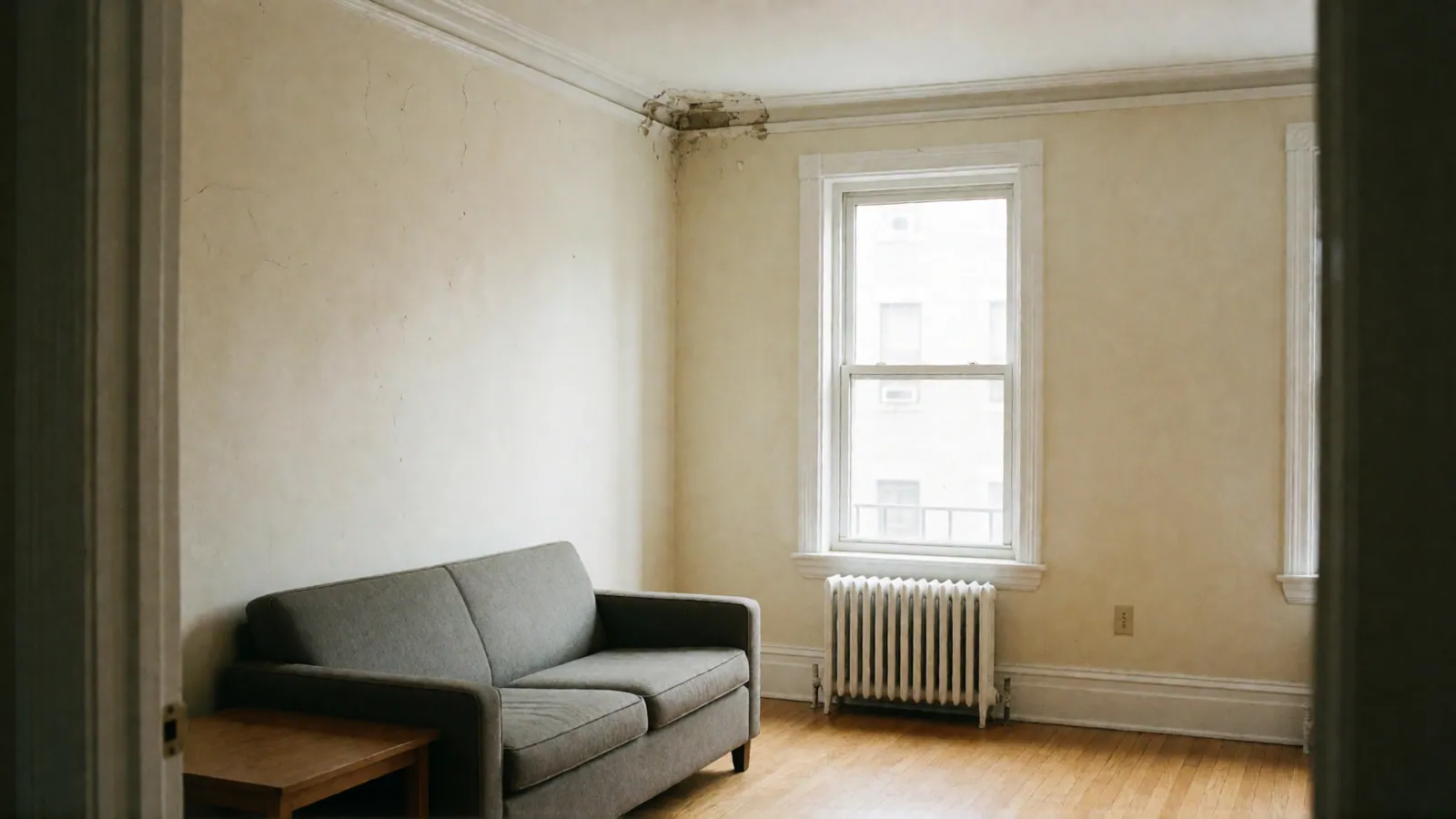
AI-generated illustration. Not a real home or business.
First
The planning range
The scope planner turns your answers into a crew, a range of painter-hours and working days, and the paint the rooms need, and works out the money from the published rate and prices. Both ends of the range are printed the same size, because either can happen.
It answers the first question anyone asks a painter, which is roughly how long and roughly how much, before anybody has seen the walls. That is all it is for, and it says so.
A planning range is not an estimate or a quote, and nothing on this site is an offer of work. It is the painter-hours your answers suggest, at the published rate, with the paint at its price and the sales tax. The work is priced in a written contract after a walk-through at your home, and you can cancel that contract until midnight of the third business day after you sign it.
Then
The walk-through
Every job starts with a walk-through at your home: we look at every wall, ceiling, door and window, the condition of the plaster and the old paint, the furniture and the building's rules. It takes about forty minutes. A walk-through costs nothing, and you don't have to sign anything after it.
The walk-through is where a range turns into a plan. It sees what answers leave out: the crack that runs behind the bookcase, the paint lifting under the kitchen window, the closet nobody counted, the radiator that cannot be reached without moving the bed.
After the walk-through
The written contract
What you sign, and when. After the walk-through you get a written contract: what is painted, the prep, the paint by kind and sheen and the colors, the price, the dates we expect to start and finish, and the payment stages. The State's contract law covers painting even though the City's license does not, so any painting job over five hundred dollars needs one in writing, signed by both of us, with a copy for you before any work is done.
The contract is priced at the same published rate and the same paint prices as the range, with the sales tax on the whole bill. The difference is that somebody has now seen every wall.
- N.Y. General Business Law § 771(1) (opens the source in a new tab) A home improvement contract is in writing, signed by both, and states the work, the materials, the price, the approximate start and completion dates, the payment schedule, the mechanic's lien notice and the insurer covering the work.
- N.Y. General Business Law § 770(6) (opens the source in a new tab) A home improvement contract is one whose price is more than five hundred dollars, and a residential tenant or a co-op shareholder is an owner.
What moves a range
The same few things move a planning range at the walk-through, and most of them can be settled by a good answer.
What the answers can miss. What moves a range at the walk-through: walls in worse shape than the answers said, more doors or windows, a color that needs a third coat, furniture nobody mentioned, a building's short working hours, and a ceiling that turns out to be textured.
Walls in worse shape than the answers said
A wall you live with looks better than it is. Answer from what low side light shows, from a window or a flashlight held flat to the wall, not from what the room looks like at midday.
More doors or windows
Each door is counted on both faces with its frame, and each window by its sashes, its casing and its sill. A closet door or a pair of doors between two rooms is easy to forget from the sofa.
A color that needs a third coat
Some deep colors and some bright ones do not cover in two coats, even over primer. The samples brushed on your wall after the walk-through show it before anything is painted.
Furniture nobody mentioned
A bookcase full of books is a different morning from a bare wall. The planner asks how furnished the rooms are; the walk-through sees what stands against each wall.
A building's short working hours
A building that allows work for only part of the day makes every day on site shorter, and the same painter-hours run over more days.
A ceiling that turns out to be textured
A textured ceiling in an older building is left out of the range and is not painted at all. One in a newer building is painted, and takes longer than a smooth one.
The working
The pace the hours are counted at
| The work | The time it takes |
|---|---|
| Walls, the first coat | about 180 square feet an hour |
| Walls, each coat after it | about 240 square feet an hour |
| Ceilings, the first coat | about 150 square feet an hour |
| Ceilings, the second coat | about 200 square feet an hour |
| A primer coat on the walls | about 220 square feet an hour |
| Baseboard, the first coat | about 60 feet an hour |
| Baseboard, the second coat | about 120 feet an hour |
| A door, both faces and the frame, two coats | an hour and a half |
| A window: the sashes, the casing and the sill | an hour and fifteen minutes |
| The inside of a reach-in closet | an hour and a half |
| Moving and covering the furniture, a room: empty | forty-five minutes |
| Moving and covering the furniture, a room: furnished, as most homes are | an hour and fifteen minutes |
| Moving and covering the furniture, a room: very full: bookcases, collections, a lot on the walls | an hour and forty-five minutes |
| Protecting the hall and the entry, and the walk-through at the end, a job | two hours |
| Lead-safe sheeting, the clean-up and the cleaning check, a room | an hour and fifteen minutes |
| Preparation, walls in good shape | one tenth of the painting time again |
| Preparation, walls in fair shape | three tenths of the painting time again |
| Preparation, walls in poor shape | six tenths of the painting time again, and a day for the filler to dry |
Read it one coat at a time. The first coat is the slow one: the brush cuts the line at the ceiling and in the corners for the first time, and the wall drinks paint wherever it was patched. The second coat follows a line that is already there, over a surface that no longer soaks it up.
A ceiling is slower than a wall of the same size, because the work is overhead and every pass is cut against the wall it meets. A door is counted whole, both faces, the edges and the frame, because the edges are where a door is touched and where the enamel wears first.
Preparation is counted as a share of the painting time, because a wall in worse shape takes more of everything: more filling, more sanding, more primer on more patches. In an older home that share grows again, because the prep is done wet and by hand.
The rules this page refers to
Each is linked to its source, with what it says in plain words.
- 6 RCNY § 5-12 (opens the source in a new tab) When a range of prices is stated, the highest is printed at least as large as the lowest, and a price that cannot be known in advance is stated with the average price of the past year.
- N.Y.C. Administrative Code § 20-395 (opens the source in a new tab) A home improvement contractor discloses that a written estimate is available, and any fee for one is disclosed before it is made.
Plan your painting
Try the scope planner: a crew, painter-hours and working days at the published rate, in about two minutes. Sending it to us books nothing.