$70 a painter-hour, plus sales tax
Interior painting
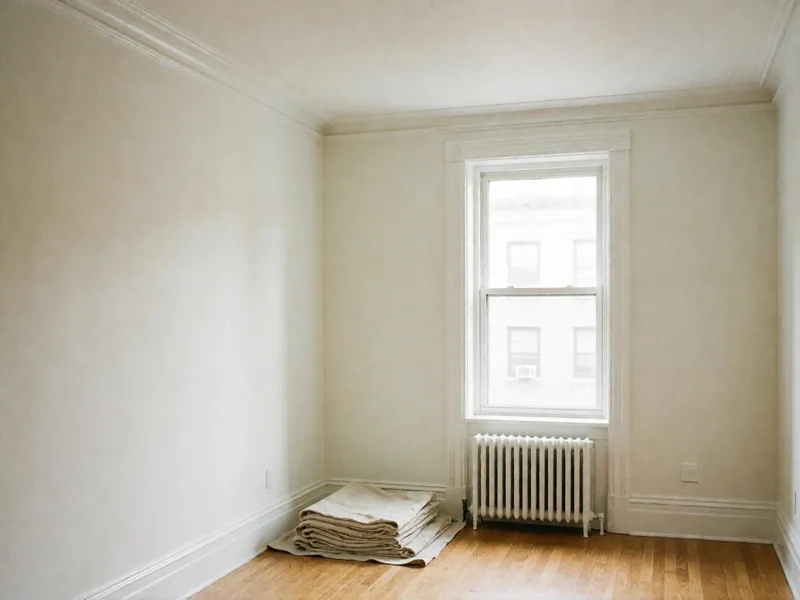
Walls and ceilings in apartments and houses across Queens: filled, sanded, spot-primed and given two coats, at one published rate.
Every job starts with a walk-through at your home.
37-32 61st Street, Woodside, NY 11377
Painting outside
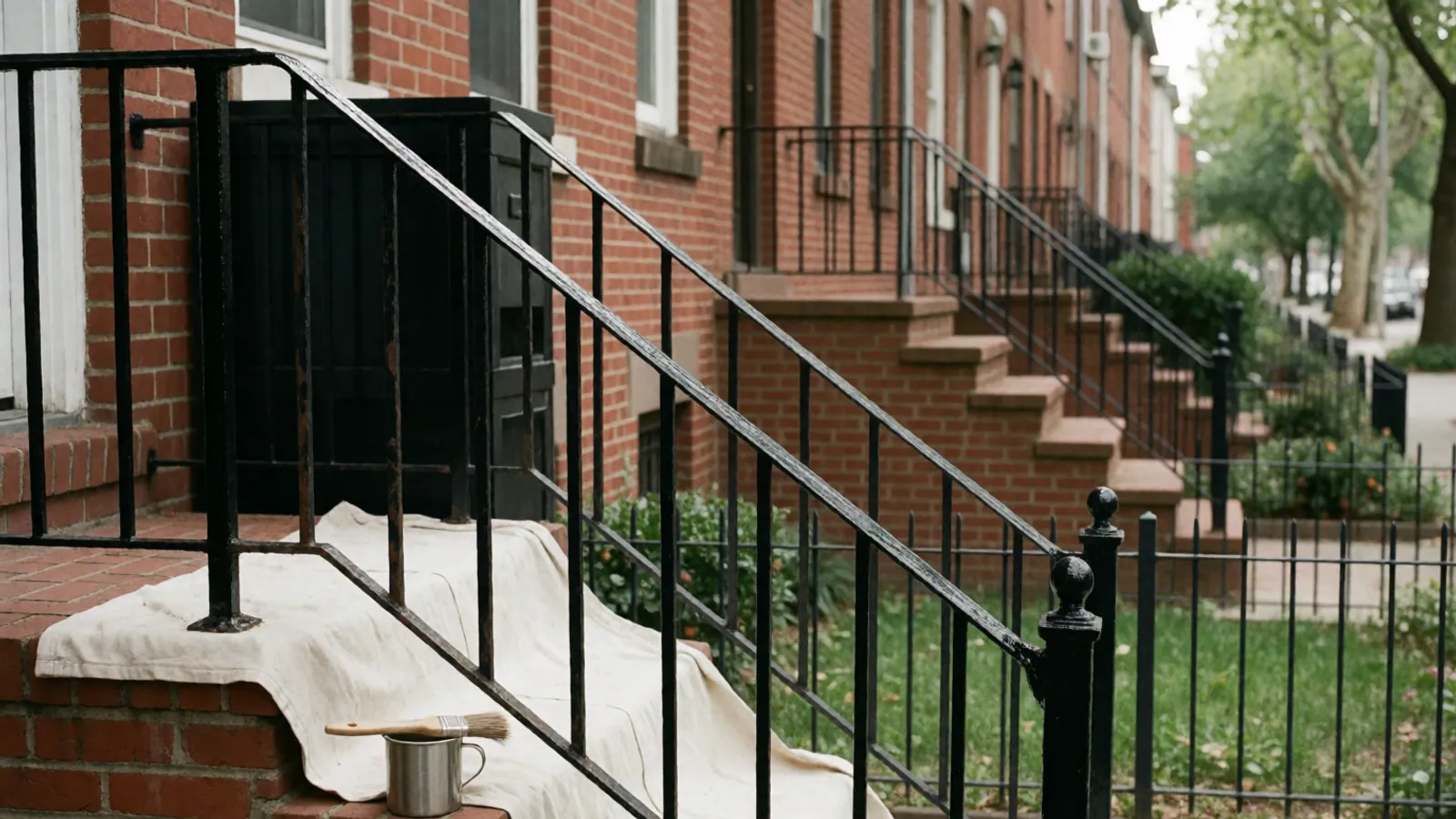
Loose rust brushed off by hand, the bare metal primed the same day, two coats of black enamel, the brick below covered.
AI-generated illustration. Not a real home or business.
An iron railing fails from under its paint. Water gets in at a chip, rust spreads beneath the paint around it, and the paint lifts in a blister with rust inside. Painting over the blister seals the rust in, and it keeps going.
So the loose rust and the lifting paint come off first, with a wire brush and a scraper, by hand, down to metal that is sound or paint that is holding. Rust that is tight and dark can stay; rust that comes away under the brush cannot.
Bare iron starts to rust again overnight, so whatever is brushed down to metal is primed before the crew leaves, with a primer made for metal. The enamel goes over it on every face: the newel post, the balusters, and the underside of the rail, which is where the water sits.
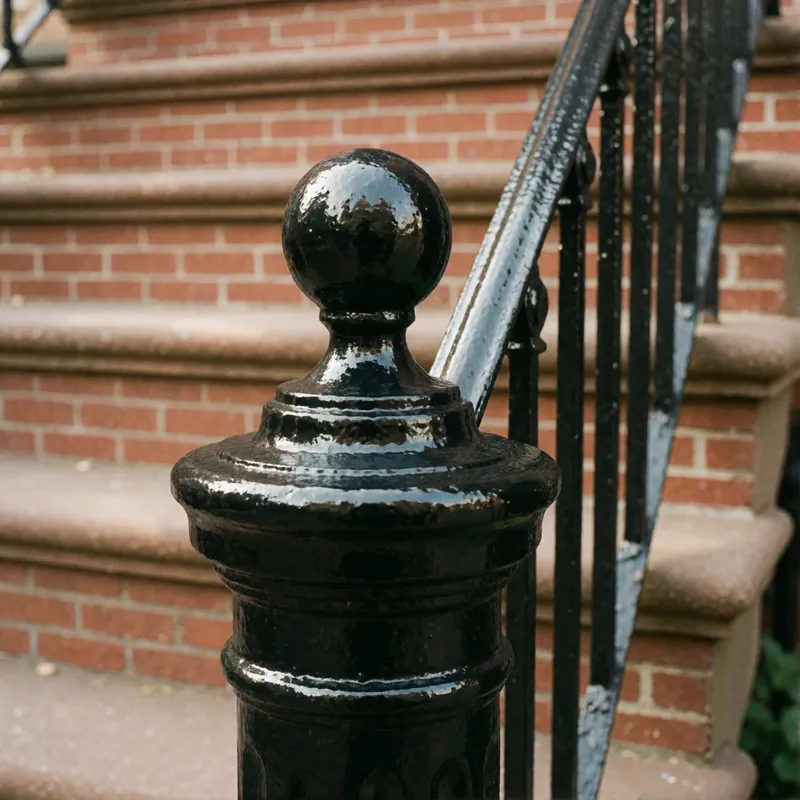 AI-generated illustration. Not a real home or business.
The brick or stone of a stoop is covered before the brushing starts, because rust and paint chips stain masonry and are hard to get out of it. The cloth goes over the steps, and for most houses the stoop is the way in, so the work leaves a way up it.
Iron is painted in dry weather, and not first thing in the morning. Metal cools at night more than the air around it and collects dew, and paint brushed onto a damp rail traps the water under it, which is how the next blister starts.
In front of a house built before 1978, the paint on old ironwork is likely to be old paint too. The chips are caught on the cloth and gathered up, never swept into the yard.
Iron fences and gates are prepared like the railing. A gate is painted open and moved while the paint sets, and its hinges and latch are left working, because a gate that dries shut is a gate somebody forces.
A wooden fence has two faces, and the far one is usually the neighbor's view and often on the neighbor's side of the line. Painting it means working from their yard, which is a conversation with them before it is a job for anyone.
Like the house, a railing or a fence is seen before it is priced: the old finish, the state of the iron or the wood, and how much of it can be reached from your own side.
We paint the outside of one- to three-family houses, up to two stories and the gables, working from the ground and from supported scaffolding under forty feet: clapboard, aluminum and vinyl siding, brick and stucco, trim, stoops, railings and fences, from April to November. Every exterior is seen first. We don't work from a swing stage or a suspended scaffold, which in New York City is work for a licensed rigger, or on an apartment building, a fire escape or over the sidewalk.
$70 a painter-hour, plus sales tax
Walls and ceilings in apartments and houses across Queens: filled, sanded, spot-primed and given two coats, at one published rate.
$70 a painter-hour, plus sales tax
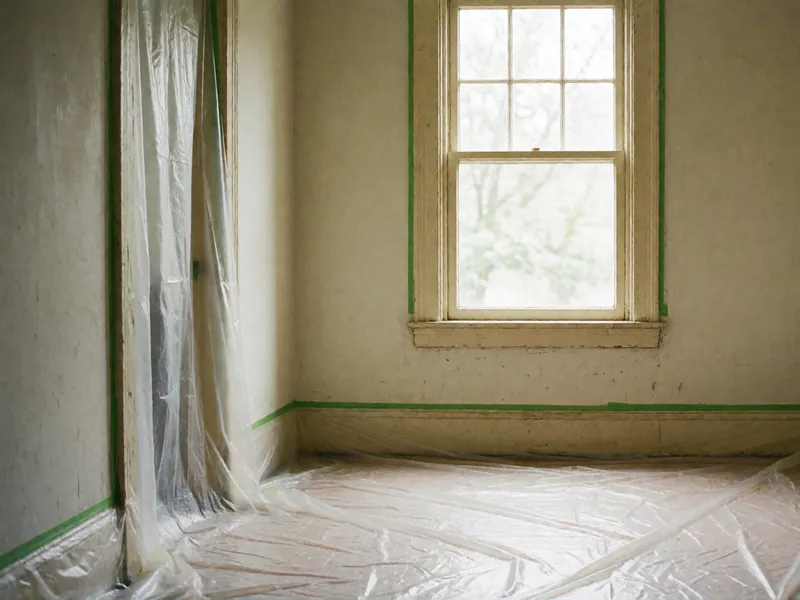
Plastic over the floor and the doorway, wet hand prep, no flame and no power sander, a HEPA clean-up and a check against the card.
Priced after a site visit
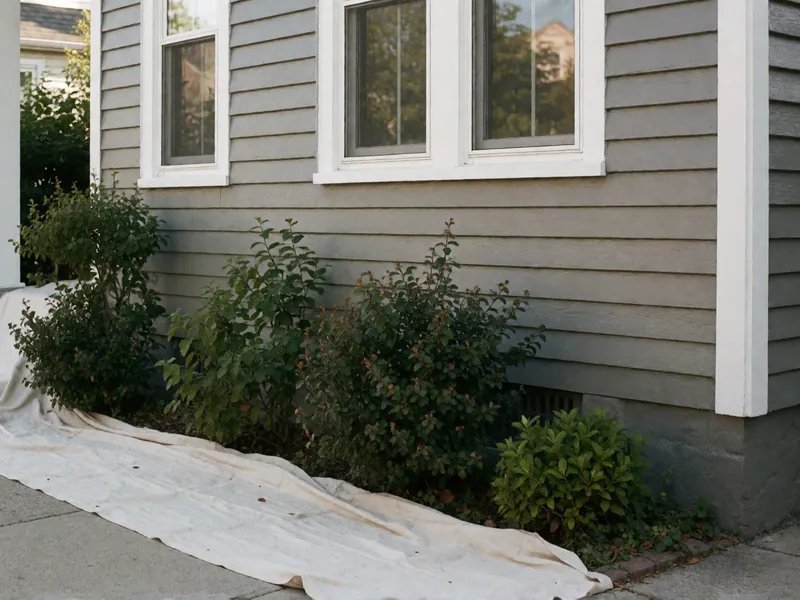
One- to three-family houses up to two stories: clapboard, aluminum and vinyl siding, brick and trim, from April to November. Seen first.
At your home, about forty minutes: every wall, ceiling, door and window, the old paint, the furniture, the building's rules. It costs nothing, and nothing has to be signed after it.