How it works
The walk-through: every wall seen before anything is priced
What is looked at in your home, how to get ready for it, how the colors are chosen, and the written contract that follows it.
AI-generated illustration. Not a real home or business.
What the walk-through is for
Every job starts with a walk-through at your home: we look at every wall, ceiling, door and window, the condition of the plaster and the old paint, the furniture and the building's rules. It takes about forty minutes. A walk-through costs nothing, and you don't have to sign anything after it.
Marisol Achterberg-Nunes runs the company and does most of the walk-throughs. She runs a hand along every wall at the walk-through, because a crack you can feel is a crack the paint will show. Side light from a window, or a flashlight held flat to the wall, shows the rest: every ridge an old patch left, every nail hole filled proud, every place the last painter rolled over a crack instead of filling it.
What is looked at
A wall is read the way a painter reads it, from the plaster out.
The plaster
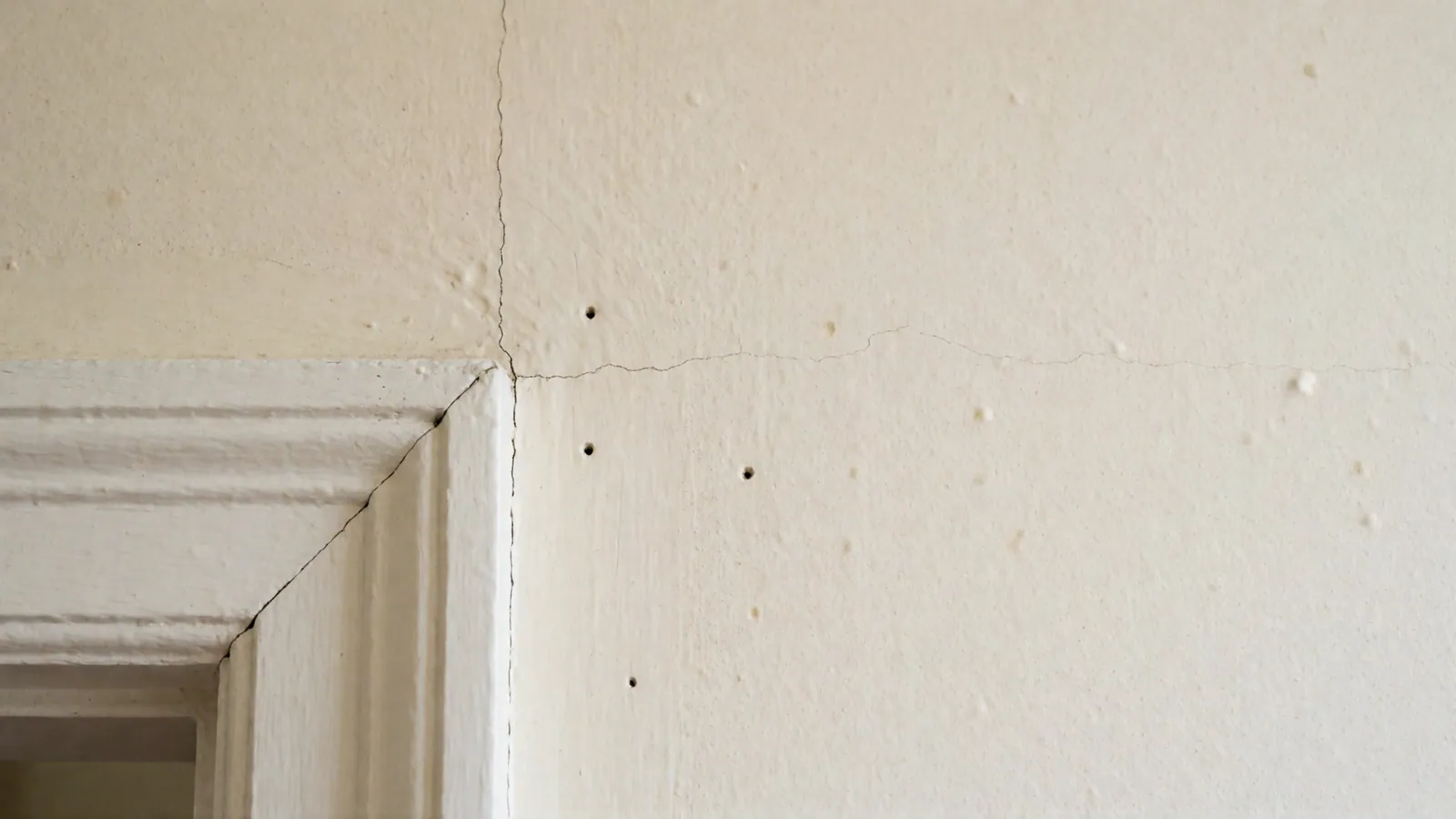
Fine cracks that run in parallel lines are usually the lath behind the plaster; a crack that runs out from the corner of a door or a window is the building moving. Both are filled and spot-primed. A bulge, or plaster that sounds hollow under a knuckle, is repair work, and the walk-through says so before anything is written down.
The old paint
Chalky paint comes off on a fingertip and has to be washed before anything will stick to it. Glossy old enamel on the trim is sanded dull by hand so the new coat has something to hold. Paint lifting under a window or behind a radiator is usually water or heat; it is scraped back to sound paint, wet in an older home, before it is primed.
The ceilings
Whether any of them is textured, and roughly when the building went up. A textured ceiling in a building from before 1987 is left out of the job and never removed.
The doors, the windows and the radiators
Whether the doors can come off their hinges, whether the sashes still slide, and whether a radiator that is to be painted can be left cold for it. A sash that is painted shut in its track is a window you can no longer open, so the tracks are part of the look.
The furniture and the floors
What stands against the walls, what can be moved to the middle of the room, and what you would rather clear yourself. The floors are covered either way.
The building
The hours it allows, the service elevator, and what the managing agent asks of a painter. A certificate of insurance is the one thing on that list this demonstration company could not send, and its page says why.
Before the walk-through
Have every room we might paint open, with the lights on.
Show us the cracks, the stains and the places where the paint peels, and say which ones bother you.
Tell us roughly when the building was built, and whether the ceilings were ever sprayed or textured.
Have the building's rules for contractors to hand, if it has them: working hours, the elevator, the insurance certificate.
Think about the colors, but don't buy any paint: we brush samples after the walk-through.
The colors
Your choice, tested at home. You choose the colors, from any maker's colors; we brush a few large samples on the wall after the walk-through so you can see them in your own light, morning and evening.
Anjali Ferreira-Lund does walk-throughs, and brushes the color samples on the wall. She brushes samples two feet square, because a chip the size of a stamp tells you nothing about a wall. She looks at them with you in the morning and again in the evening light. Paint usually dries a shade darker than it looks in the tray, and a room facing north turns a warm color gray by evening; a sample on your own wall shows both before anything is painted.
What comes after it
What you sign, and when. After the walk-through you get a written contract: what is painted, the prep, the paint by kind and sheen and the colors, the price, the dates we expect to start and finish, and the payment stages. The State's contract law covers painting even though the City's license does not, so any painting job over five hundred dollars needs one in writing, signed by both of us, with a copy for you before any work is done.
Plan it first, if you like
Try the scope planner: a crew, painter-hours and working days at the published rate, in about two minutes. Sending it to us books nothing.