Every job starts with a walk-through at your home.
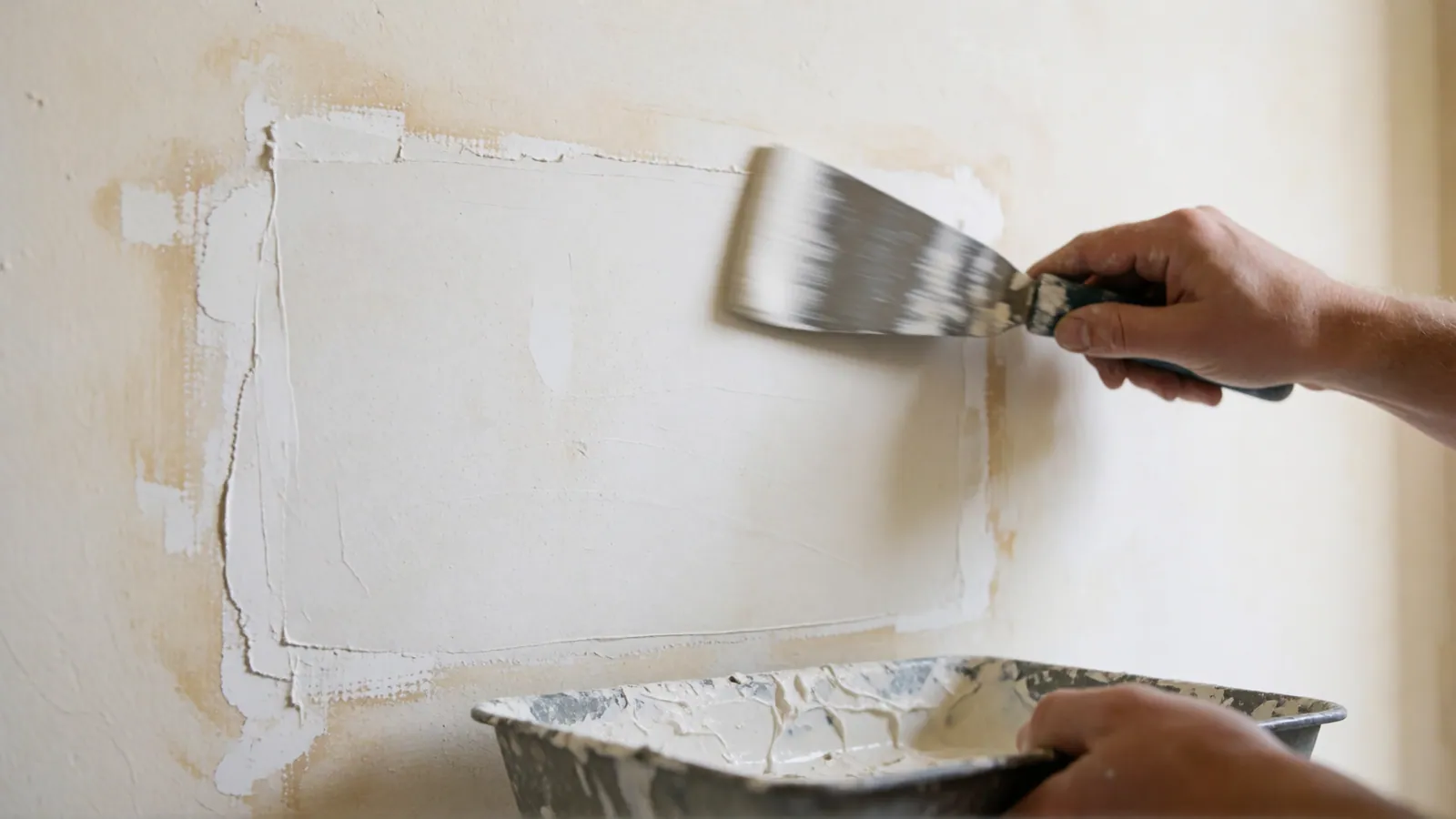
A painter's hands and forearms smoothing white joint compound over a patch in a cream plaster wall with a wide steel knife, the other hand holding a steel mud pan at the bottom of the frame.

Painting inside

Most of a good paint job is done before the paint

Cracks and holes filled twice, sanded flat and spot-primed, gaps caulked: the work the paint shows or hides.

  • $70 a painter-hour, plus sales tax
  • Planned in the scope planner
  • Prep, not repair

AI-generated illustration. Not a real person, home or business.

Filled twice, sanded flat, primed

Filler shrinks as it dries. A crack filled once and painted the same afternoon comes back as a shallow groove exactly where it was. So every crack and hole is filled, left to dry, and filled again, and only then sanded flush with the wall around it and checked with a hand run flat across it.

A hairline crack is opened a little with the corner of a knife before it is filled, so that the filler has an edge to hold. Filler smeared over a closed hairline sits on the surface and flakes off with the next coat of paint.

Then every patch is spot-primed. Filler is more porous than painted plaster and drinks the first coat of paint, which dries duller over it than over the wall; in the light from a window a dull patch reads as a patch, however flat it was sanded.

Gaps that move are caulked rather than filled: the seam where a baseboard meets the wall, the joints of a door casing, the line along the top of the crown. Filler cracks when wood moves, and caulk moves with it.

  • Filler goes on twice; it shrinks as it dries.
  • Repair work is for a licensed contractor.
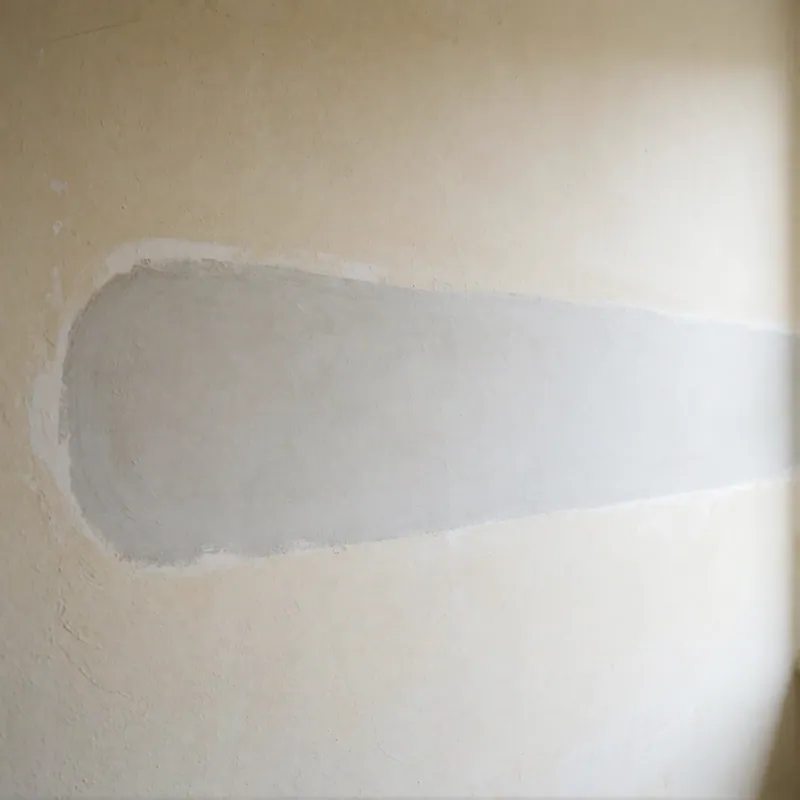
A cream plaster wall in raking light with a long band of gray spot primer where a crack was filled and sanded flat.AI-generated illustration. Not a real home or business.

Reading your walls before you answer the planner

The planner's own advice for the walls question: look at them in low side light, from a window or a flashlight held flat to the wall. Light falling straight onto a wall flattens it; light raking across it throws a shadow from every dent, ridge and old patch.

The planner's answers for the walls are these, and each adds a share of the painting time for the prep:

  • Good

    A few nail holes and scuffs. The planner adds one tenth of the painting time again.

  • Fair

    Cracks, dents, some flaking at the windows or radiators. The planner adds three tenths of the painting time again.

  • Poor

    Many cracks, old patches and flaking paint, but the plaster is sound. The planner adds six tenths of the painting time again, and a day for the filler to dry before it is sanded and primed.

In an older home the prep takes longer, because it is done wet and by hand.

Materials, counted by the room. Plastic, paper, tape, filler, caulk and sandpaper are $35 a room. In a home built before 1978 the lead-safe sheeting and the cleaning materials add another $35 for each room.

Where prep ends and repair begins

Every sound wall can be prepared for paint. The question is whether the plaster is sound. Press flat on a cracked wall: if it is firm, the crack is in the surface and can be filled. If the plaster gives, moves or sounds hollow, it has come away from the lath behind it, and filler over it cracks again the first time a door slams.

The same goes for a bulge, a hole a hand fits into, plaster that is soft or powdery, and a stain that is still damp. Each is repair work, and paint over it hides the problem for a season. A stain from an old leak that has been stopped and has dried, on plaster that is still sound, is different: it is spot-primed with a stain-blocking primer, because the stain is in the water's path and bleeds through ordinary paint as a brown ring.

So one answer to the walls question stops the planner: "It needs repair: loose or bulging plaster, holes, water damage, or a skim coat over whole walls."

We paint, and we prepare surfaces for paint: we wash, fill holes and cracks, sand a patch, spot-prime and caulk. We don't repair walls. Replacing plaster or drywall, skim-coating whole walls, carpentry and water damage are repair work, which in New York City makes the whole job home improvement work and needs a license this company does not hold. For those, hire a licensed contractor first, and we paint afterwards.

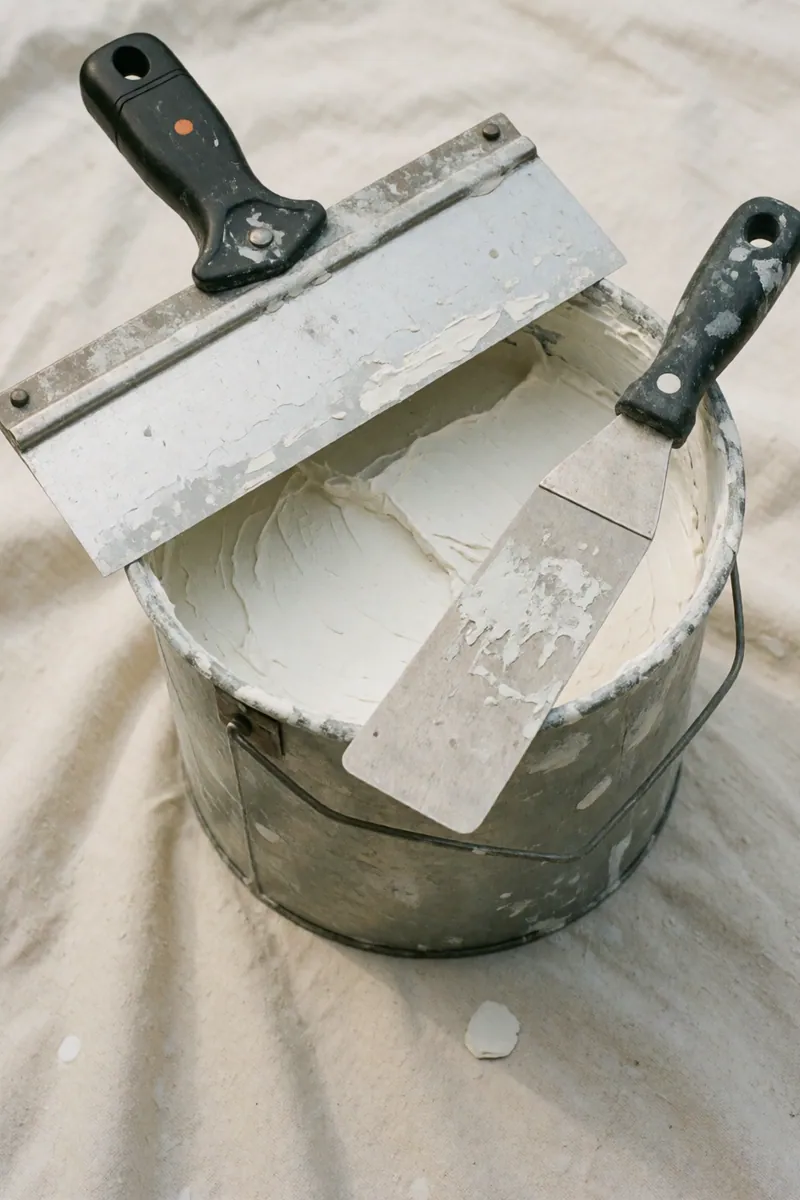
A wide taping knife and a narrow putty knife resting across a steel pail of white joint compound on a canvas drop cloth.AI-generated illustration. Not a real home or business.

Ilse Moraes-Quaye

Prep and patching lead

Fills, sands and spot-primes, and sets up the plastic in older homes.

Ilse fills a crack twice, because filler shrinks as it dries.

Ilse wipes every sill against the cleaning card before a room in an older home is opened again.

The picture is a still of the tools, not a portrait.
A worked example: walls in poor shape

Filling that dries overnight, and a primer for the change of color. The household is invented.

A worked example: a planning range

Two bedrooms and a living room, dark to light A 1950s co-op in Woodside

The fourteen answers behind it
Bedrooms
2
Living or dining rooms
1
Hallways and entries
1
Where is it?
Woodside or a neighborhood next to it
How big are the rooms?
About average for New York
How high are the ceilings?
Nine to ten feet, as many prewar buildings have
What are we painting in those rooms?
Walls and ceilings
Is any of the ceilings textured, sprayed-on or "popcorn"?
No, the ceilings are smooth
And the doors?
The doors of these rooms, both sides and the frames
What shape are the walls in?
Poor: many cracks, old patches and flaking paint, but the plaster is sound
And the color?
A big change: dark to light, or light to a deep color
How furnished are the rooms?
Furnished, as most homes are
When was the building built?
Before 1960
What kind of home is it?
An apartment in a building with three or more apartments (a co-op or condo included)
  • Paintersby the size of the jobTwo painters
  • Painter-hoursthe work, counted in whole hours62 to 87 painter-hours
  • Working days on sitewith this crew, and a day for the filler to dry5 to 6½ working days
  • The ratethe same on every working day$70 a painter-hour
  • The time, at the ratethe painter-hours at the rate$4,340.00 to $6,090.00
  • The paint, roughlytwo coats and a primer coat, rounded up to the gallon10 gallons of wall paint, 4 of ceiling paint and 6 of primer
  • Paintby the gallon, and the trim enamel by the item$1,270.00
  • Plastic, tape, filler and the restfour rooms together, the lead-safe sheeting included$280.00
  • Before sales taxthe time, the paint and the materials$5,890.00 to $7,640.00
  • Sales tax, 8.875%on the whole bill$522.74 to $678.05
  • The rangea planning range, not an estimate$6,412.74 to $8,318.05
  • Built before 1978: planned lead-safe. It takes longer, and the scope planner counts the time.
  • One more day, because heavy filling dries overnight before it is sanded and primed.
  • A primer coat first, because of the big color change.

The scope planner's answer to these questions, at the published rate and prices. A planning range is not an estimate or a quote, and nothing on this site is an offer of work.

One rate for every painter on every working day, counted in whole painter-hours, with no minimum. Sales tax is added on the whole bill, at 8.875%.
The timeBefore sales tax
One painter for an hour$70
One painter for a day of eight hours on site$560

Related services

Plan your painting

Try the scope planner: a crew, painter-hours and working days at the published rate, in about two minutes. Sending it to us books nothing.