How it works
A painting day, from the plastic to the last coat
The order a crew works in, and why: everything covered first, the cracks filled twice, the ceiling before the walls, the trim and the doors last.
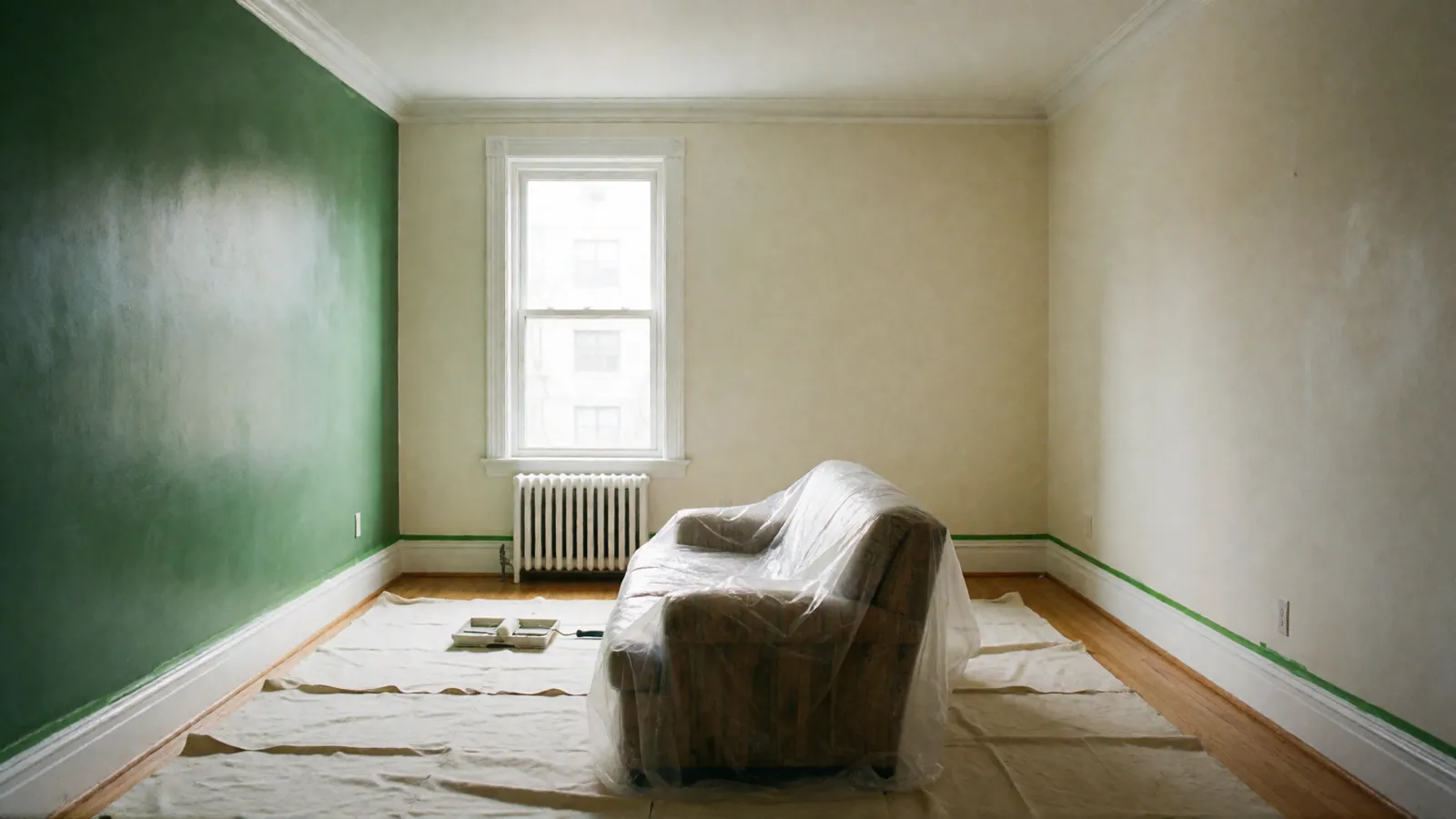
AI-generated illustration. Not a real home or business.
The day in nine steps
The order is the same for one bedroom and for a whole house, because each step makes the next one cleaner.
Before the day
The office has the building's hours and has booked the service elevator, you have the signed contract and, in a home built before 1978, the federal pamphlet. The colors are chosen and the small things are off the shelves.
The painters arrive
The crew lead walks the rooms with you against the contract: what is painted, what is not, and anything already chipped or cracked.
Everything covered
Furniture to the middle under plastic, canvas over the floors and the hall, switch plates and outlet covers off, tape on the glass and the hardware. In a home built before 1978, plastic sheeting over the floor and across the doorway.
The prep
Wash, fill the holes and cracks, sand the patches smooth, caulk the gaps in the trim, and spot-prime every patch. In an older home, wet and by hand.
Ceilings first
The ceilings, two coats, before a drop of wall paint, so nothing drips onto a finished wall.
The walls
Cut in at the ceiling, the corners and the trim with a brush, then rolled; the second coat after two to four hours.
Trim and doors last
Baseboards, windows and doors in enamel, the doors left ajar to dry.
Cleaned up every day
Brushes and rollers washed, the plastic left in place, the tools in one corner, and the room you need tonight usable.
The walk-through at the end
You and the crew lead go over every room. Anything missed goes on a touch-up list and is done before the last stage is paid.
Why it goes in this order
Casimir Oduya-Hart leads the crews in apartments and houses across Queens. He covers the floor and the furniture before the first brush comes out of its sleeve. The covering comes before the prep because sanding, even a patch by hand, puts a fine dust on everything below it.
Ilse Moraes-Quaye fills, sands and spot-primes, and sets up the plastic in older homes. She fills a crack twice, because filler shrinks as it dries. The second pass goes on after the first has dried and sunk, and the patch is sanded flat and spot-primed before any color goes over it. An unprimed patch soaks up the first coat and shows as a dull square in raking light.
The ceiling goes before the walls because a roller overhead throws a fine mist, and it should land on a wall that is still to be painted. The walls are cut in with a brush at the ceiling, the corners and the trim, then rolled while the cut line is still wet, so the brushed band does not show as a stripe of a different sheen.
Tobias Lindqvist-Amadi paints the doors and the trim, and takes old wallpaper down. He takes the doors off their hinges and paints them flat when the building allows it. Enamel levels as it dries, and a door lying flat dries without the sags a standing door collects under its panels. The trim goes last because a straight line of enamel is easier to lay against a finished wall than a wall is to cut against wet trim.
A radiator, where one is to be painted, is painted cold: paint on hot iron skins over before it can flow out, and blisters. A prewar window's sashes are painted with the tracks left clean, and moved while they dry, so the window still opens at the end of the job.
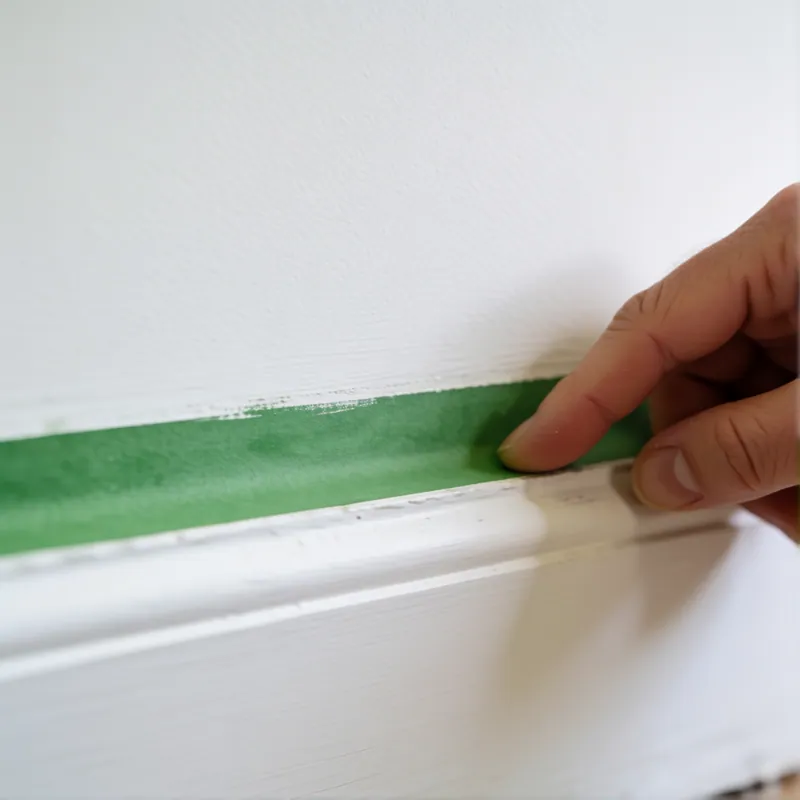 AI-generated illustration. Not a real person, home or business.
When the painters are there
The painters are on site from 8 am to 4 pm, Monday to Friday. Where a building allows work only at other hours, the building's hours win, and a day on site is shorter.
Monday to Friday only. No painting is done on a weekend or on a federal holiday: New Year's Day, Martin Luther King Jr. Day, Washington's Birthday, Memorial Day, Juneteenth, Independence Day, Labor Day, Columbus Day, Veterans Day, Thanksgiving or Christmas Day, or the day any of them is observed.
Your part of the day
Five things, and each of them makes the painters' part shorter.
Be there when the painters arrive, or have someone there who can answer for you.
Walk the rooms with the crew lead, and point out anything already damaged.
Keep children and pets out of the rooms being painted, and away from a lead-safe room until it is opened again.
Leave a window open a little where you can; the paint dries faster.
At the end, walk every room with the crew lead before the last stage is paid.
Between coats, and after the last one
Dry, then hard. Acrylic paint is dry to the touch in about an hour and ready for its next coat in two to four; a room can be used lightly the next day. It hardens fully over the next month, so books on a fresh shelf or a lamp on a fresh sill wait about five days.
Dry to the touch is not the same as hard. A fresh wall takes a light bump in the first days and shows it, and a fresh shelf holds a print of whatever stood on it too early, which is why the books go back last.
Plan your painting
Try the scope planner: a crew, painter-hours and working days at the published rate, in about two minutes. Sending it to us books nothing.