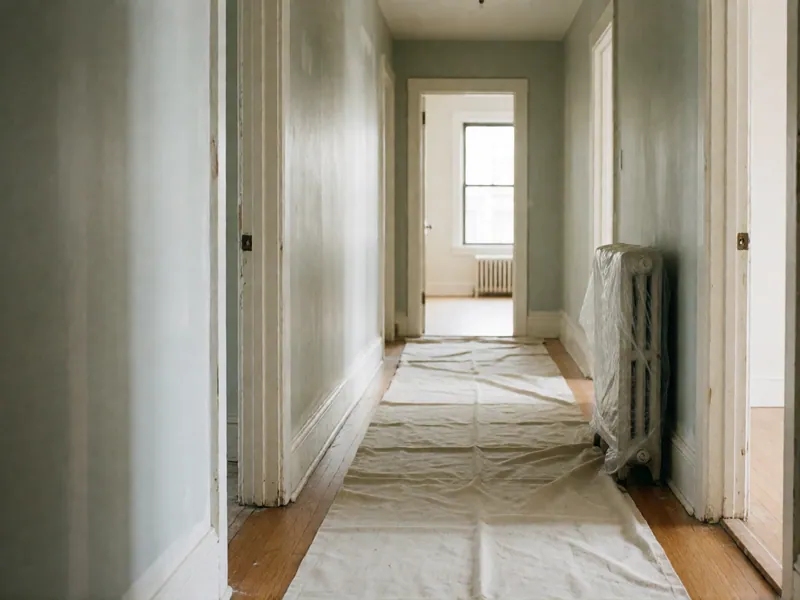
Every job starts with a walk-through at your home.
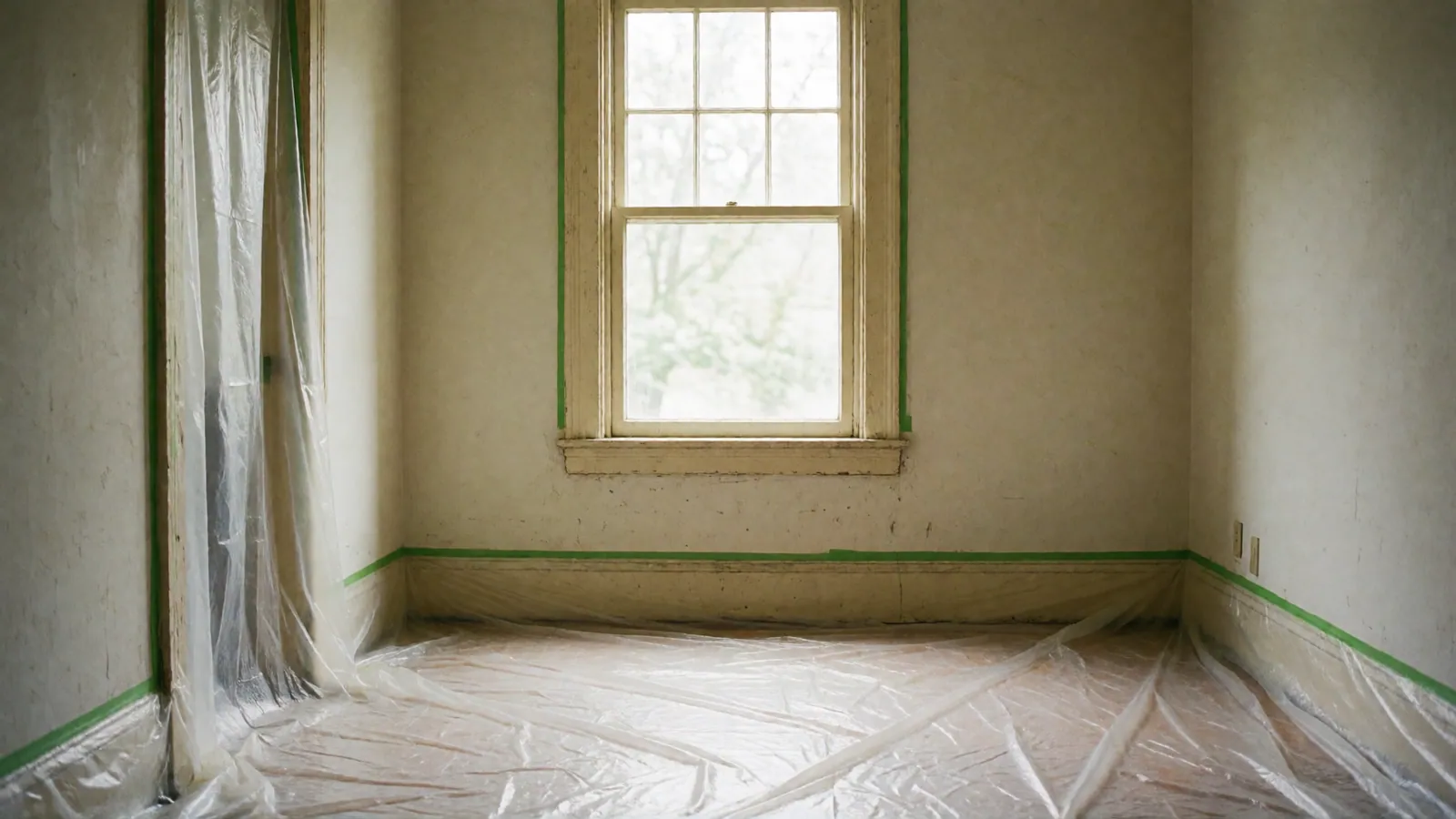
A small room in an older house set up for careful paint preparation: clear plastic sheeting over the whole floor and hung across the doorway, green tape along the baseboards and a window casing, the old cream paint on the window trim, the room emptied.

Painting inside

In an older home, the prep is done the lead-safe way

Plastic over the floor and the doorway, wet hand prep, no flame and no power sander, a HEPA clean-up and a check against the card.

  • $70 a painter-hour, plus sales tax
  • Planned in the scope planner
  • Built before 1978: planned lead-safe

AI-generated illustration. Not a real home or business.

Why the year a building was built matters

Under the paint you can see are coats nobody has seen for decades. In a prewar apartment the trim may carry a great many of them, and the oldest were brushed on when lead was an ordinary ingredient of house paint.

Old paint under sound coats stays where it is. What the rules are written against is dust and chips, and ordinary preparation makes both: sanding turns old paint into fine dust, scraping into chips, heat into fumes. The dust settles on sills and floors, where nobody sees it and where a small child's hands go.

So the year comes first. The scope planner asks when the building was built, and for a home built before 1978, or when you don't know, it plans the work the lead-safe way and counts the time that takes.

  • Every home built before 1978, or of unknown age.
  • No open flame, heat gun or power sander.

How a room is painted the lead-safe way

A home built before 1978 is painted lead-safe: plastic sheeting over the floor and across the doorway, the room emptied or its contents sealed, the prep done wet and by hand, no open flame, no heat gun and no power sanding, a HEPA vacuum and a wet wipe at the end, and each windowsill and floor checked against a cleaning card. It takes longer, and the scope planner counts the time. Before the work, the owner, and an adult who lives there if it is someone else, gets the federal pamphlet about it, "Renovate Right".

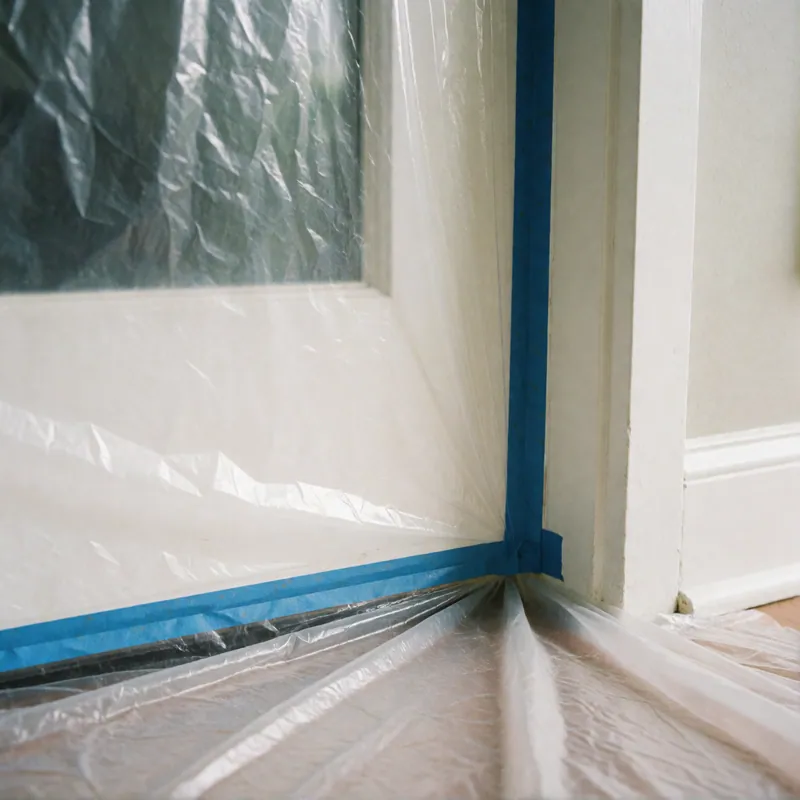
The plastic is the first thing in and the last thing out. Sheeting goes over the floor and up the foot of the walls, and a sheet across the doorway keeps the work in the room; what cannot leave the room is wrapped and sealed.

The prep is slow on purpose. A surface is misted before it is scraped, so that the chips fall damp instead of drifting; sanding is done by hand with wet abrasive, never with a machine; nothing is burned or heated off. Chips are picked up as they fall, not swept.

At the end the room is vacuumed with a HEPA vacuum, whose filter holds the fine dust an ordinary vacuum blows back into the air, then wiped down wet, and each sill and floor is wiped with a cloth that is compared with the cleaning card. A cloth darker than the card means that surface is cleaned again.

The scope planner counts an hour and fifteen minutes a room for the sheeting, the clean-up and the cleaning check, and the prep itself takes a quarter as long again as in a newer home.

Materials, counted by the room. Plastic, paper, tape, filler, caulk and sandpaper are $35 a room. In a home built before 1978 the lead-safe sheeting and the cleaning materials add another $35 for each room.

The foot of a doorway sealed with clear plastic sheeting taped to the white casing with blue painter's tape, more plastic taped across the floor.AI-generated illustration. Not a real home or business.

What the law asks, and what this company does not claim

The federal rule behind this page is written for anyone paid to disturb paint in a home built before 1978. These are its parts that touch a painting job:

Anyone paid to sand, scrape or otherwise disturb paint in a home built before 1978 must be a firm certified by the federal Environmental Protection Agency, with a certified renovator on the job. This demonstration company holds no EPA certification, so it shows no logo and no certificate number. Ask a real painter for theirs and check it on EPA's firm locator.

Painting the lead-safe way is something a crew does; certification is something a firm holds and can show you. A website can describe the first. Only a certificate number, checked on the agency's own locator, shows the second.

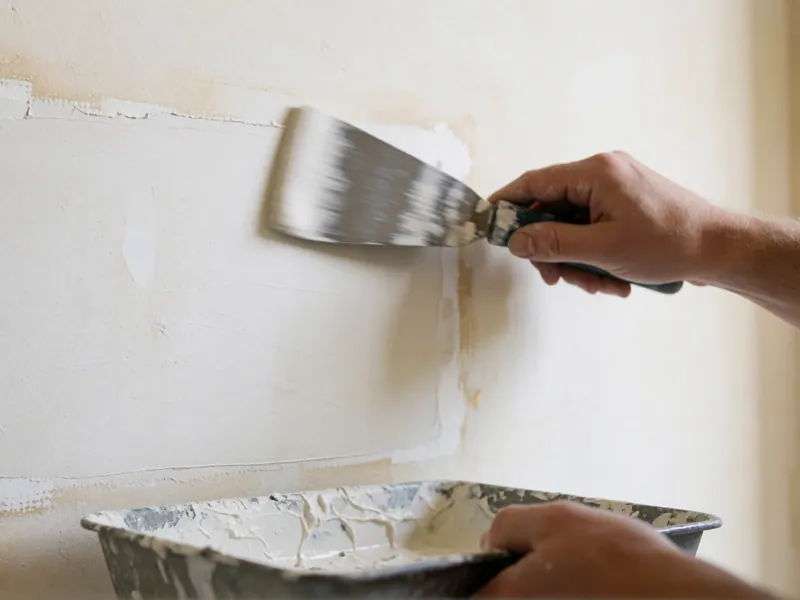
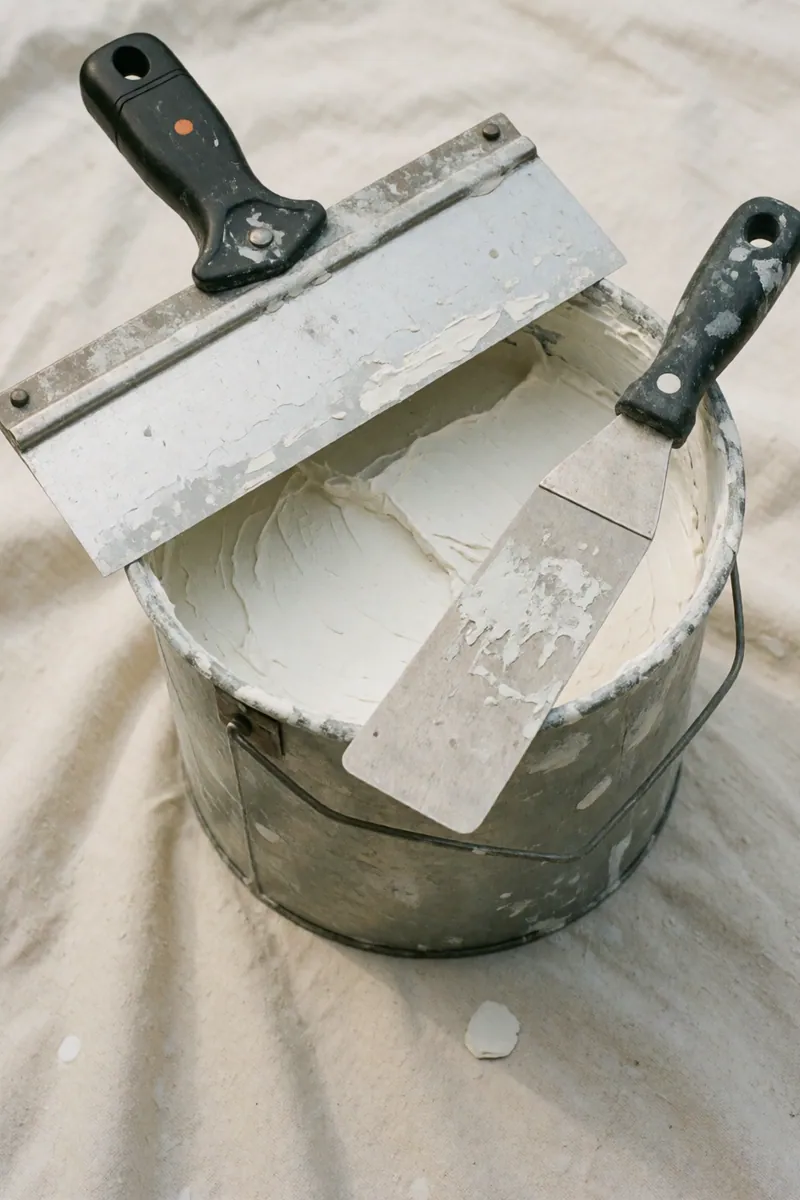
A wide taping knife and a narrow putty knife resting across a steel pail of white joint compound on a canvas drop cloth.AI-generated illustration. Not a real home or business.

Ilse Moraes-Quaye

Prep and patching lead

Fills, sands and spot-primes, and sets up the plastic in older homes.

Ilse fills a crack twice, because filler shrinks as it dries.

Ilse wipes every sill against the cleaning card before a room in an older home is opened again.

The picture is a still of the tools, not a portrait.
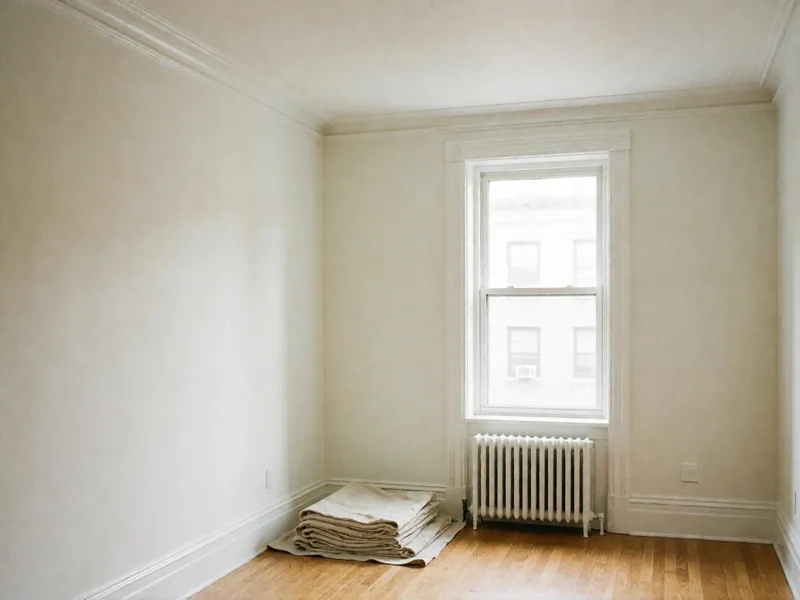
Where the planner stops: young children, and textured ceilings

New York City adds a rule of its own for apartment buildings and rented homes built before 1960 where a young child lives. It is the building owner's rule to follow, and the work it covers is not work this company takes on. So the scope planner asks one question about a child, only when the building's age and the kind of home make that rule possible, and stops unless the answer is no.

In New York City, repainting a room in an apartment building or a rented home built before 1960, where a child under six lives or spends ten hours a week, counts as disturbing lead paint. Above a hundred square feet a room it must be done by a firm certified for lead abatement, with a notice to the Health Department ten days before and a dust test afterwards by an independent tester. The building owner has these duties. This company holds no such certification, so it does not take that work: ask the owner.

Asked only where it matters. The planner asks about a young child only when that rule can apply, only as yes or no, and never keeps or sends the answer: it only decides whether the planner stops. Because it stops on any other answer, an enquiry from such a home can only have been sent after a no; the enquiry itself says nothing about a child.

The rule does not reach a home the owner lives in, so the planner asks nothing about a child on the owner's own floor of a house. The homes it asks the question about are, in its own words:

  • An apartment in a building with three or more apartments (a co-op or condo included)
  • A rented apartment or floor in a one- or two-family house

The other stop is overhead. A sprayed-on or popcorn ceiling in a building from before 1987 is left alone.

A textured ceiling in a building from before 1987 may contain asbestos. In New York City, removing it, or even painting over more than ten square feet of it, is asbestos work: it needs a survey by a City-certified asbestos investigator first, and a licensed asbestos contractor if asbestos is found. We don't do asbestos work, so such a ceiling is left out of the planner's range, and we never remove a textured ceiling.

Found during prep. If old material that might contain asbestos turns up during prep, the work in that area stops and the owner is told the same day.

A worked example, planned lead-safe

The owner's own floor of an older house, so the planner asks nothing about a child. The household is invented.

A worked example: a planning range

A kitchen, a bathroom and a hall on your own floor A 1920s two-family house in Maspeth

The fourteen answers behind it
Kitchens
1
Bathrooms
1
Hallways and entries
1
Where is it?
Elsewhere in Queens
How big are the rooms?
About average for New York
How high are the ceilings?
Eight to nine feet, as most newer buildings have
What are we painting in those rooms?
Walls, ceilings and trim: baseboards, windows and the inside of the closets
Is any of the ceilings textured, sprayed-on or "popcorn"?
No, the ceilings are smooth
And the doors?
The doors of these rooms, both sides and the frames
What shape are the walls in?
Fair: cracks, dents, some flaking at the windows or radiators
And the color?
A new color of about the same depth
How furnished are the rooms?
Very full: bookcases, collections, a lot on the walls
When was the building built?
Before 1960
What kind of home is it?
My own floor of a one- or two-family house that I own
  • Paintersby the size of the jobTwo painters
  • Painter-hoursthe work, counted in whole hours30 to 42 painter-hours
  • Working days on sitewith this crew2 to 3 working days
  • The ratethe same on every working day$70 a painter-hour
  • The time, at the ratethe painter-hours at the rate$2,100.00 to $2,940.00
  • The paint, roughlytwo coats, rounded up to the gallon4 gallons of wall paint and 2 of ceiling paint
  • Paintby the gallon, and the trim enamel by the item$489.00
  • Plastic, tape, filler and the restthree rooms together, the lead-safe sheeting included$210.00
  • Before sales taxthe time, the paint and the materials$2,799.00 to $3,639.00
  • Sales tax, 8.875%on the whole bill$248.41 to $322.96
  • The rangea planning range, not an estimate$3,047.41 to $3,961.96
  • Built before 1978: planned lead-safe. It takes longer, and the scope planner counts the time.

The scope planner's answer to these questions, at the published rate and prices. A planning range is not an estimate or a quote, and nothing on this site is an offer of work.

One rate for every painter on every working day, counted in whole painter-hours, with no minimum. Sales tax is added on the whole bill, at 8.875%.
The timeBefore sales tax
One painter for an hour$70
One painter for a day of eight hours on site$560

Related services

Plan your painting

Try the scope planner: a crew, painter-hours and working days at the published rate, in about two minutes. Sending it to us books nothing.