The journal
Painting in a co-op or condo
The insurance certificate, the alteration agreement, the working hours and the elevator: what a building asks of a painter, and how far ahead to ask.
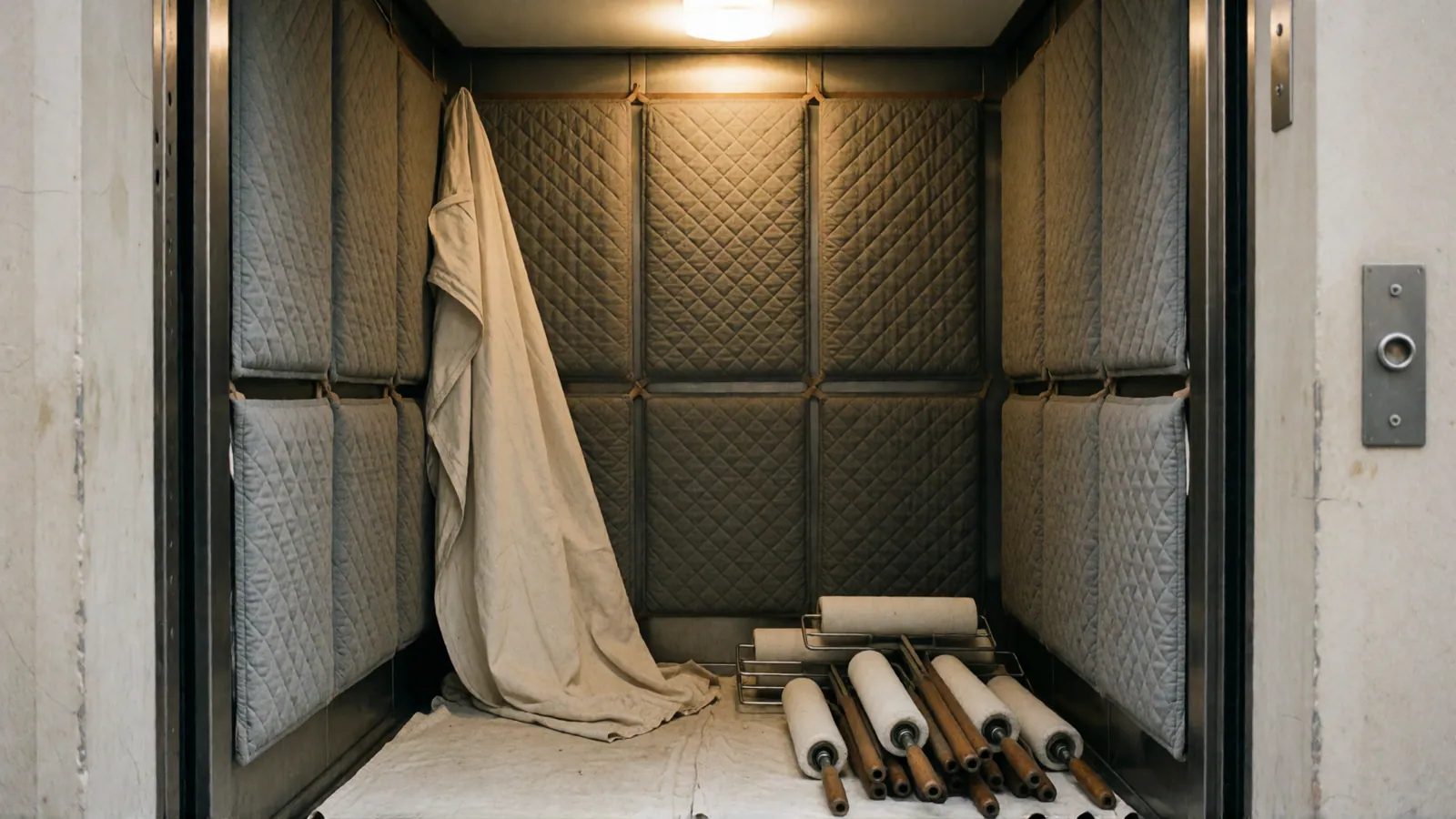
AI-generated illustration. Not a real home or business.
The building is part of the job
Painting an apartment in a co-op or a condo involves three parties, not two: you, the painter and the building. The building has a managing agent, a board behind it, a super who runs the day-to-day, and a set of rules for contractors that many shareholders read for the first time when they need a painter. None of those rules is the law, but any of them can stop a job at the front door, so they are settled before the first day rather than on it.
The certificate of insurance
Many co-ops, condos and managed buildings ask a painter for a certificate of insurance naming the building and its managing agent before anyone may start, and an alteration agreement for bigger jobs. A real painter's insurer issues the certificate; ask the managing agent exactly what it must say, a week or more ahead. It is the building's rule, not a law. This demonstration company holds no insurance, so it has no certificate to send.
A certificate is a short document from the painter's insurer, and what is on it has to match what the building asks for exactly: the building's legal name, the managing agent's, sometimes the shareholder's, and the amounts. A certificate with one name spelled differently comes back, and the job waits while a new one is issued. That is why the request goes to the managing agent first, in writing, and the answer goes to the insurer word for word.
Bigger jobs can need an alteration agreement as well: the building's own agreement with the shareholder about the work, signed before it starts. Whether a paint job needs one is the building's decision, and the managing agent is the person who knows. Ask the same question the same way: what exactly does the building need from a painter, and by when.
The hours, and the elevator
Many buildings allow work only on weekdays, often from nine to five, and want the service elevator booked and the hall protected. The building's rules win, and a shorter day on site is planned for at the walk-through.
The painters keep hours of their own:
The painters are on site from 8 am to 4 pm, Monday to Friday. Where a building allows work only at other hours, the building's hours win, and a day on site is shorter.
A building that lets contractors in later than the painters would start, and wants them gone and the hall swept before it closes, takes a piece off both ends of every day, so the same rooms fill more working days in a co-op than they would in a house. The walk-through asks about the building's hours so that the plan counts the shorter days instead of discovering them.
Two days need the elevator. The office books the service elevator with the super for the first and the last day, when the drop cloths, the plastic and the paint come and go. All we need from you is the super's or the managing agent's telephone number.
Rowan Takahashi-Bell books the walk-throughs and asks each building for its rules. He asks the managing agent for the building's working hours before anyone asks the painters.
The hall, and the neighbors
In a building, the job starts outside your door. The hall from the elevator to the apartment is covered before anything else comes in, and the drop cloths, the plastic and the paint arrive together and leave together, so the neighbors see the painters' things in the hall on two days rather than all week. Paint smell travels along a corridor too; a closed front door and a window open a little inside the apartment keep most of it at home.
Washing out brushes and rollers is a building question as well. Some buildings do not want paint going down an apartment's drains at all, and some have a slop sink in the basement for it. Ask, and the answer goes into the plan for the day.
A shareholder is an owner, for the contract
One thing a co-op does not change is the protection the law gives the person paying for the work. New York's home improvement rules treat a co-op shareholder, and a tenant, as an owner:
- N.Y. General Business Law § 770(6) (opens the source in a new tab) A home improvement contract is one whose price is more than five hundred dollars, and a residential tenant or a co-op shareholder is an owner.
- N.Y. General Business Law § 771(1)(h) (opens the source in a new tab) The owner may cancel a home improvement contract until midnight of the third business day after signing it, by written notice.
So the written contract and the three business days to cancel apply to a job in a co-op as they would to one in a house. The alteration agreement is between you and the building; the contract is between you and the painter, and it is the one that sets the price. What the contract must say is on its own page.
Older buildings
Many Queens apartment buildings are from before 1960. That brings in the City's rule about young children and old paint, and in an apartment building the duties under it are the building owner's:
In New York City, repainting a room in an apartment building or a rented home built before 1960, where a child under six lives or spends ten hours a week, counts as disturbing lead paint. Above a hundred square feet a room it must be done by a firm certified for lead abatement, with a notice to the Health Department ten days before and a dust test afterwards by an independent tester. The building owner has these duties. This company holds no such certification, so it does not take that work: ask the owner.
The rest of the practice for an older building, the preparation around old paint included, is in the piece on prewar apartments, and one of the worked examples is a co-op: two bedrooms and a living room going from dark to light.
What to sort out, and when
The certificate is the item with the longest lead time, so it goes first. The rest of the week before the work is the household's list:
In the week before the work
Ask the managing agent what the building needs from a painter, and give us the super's number so the office can book the service elevator.
Take everything off the walls: pictures, mirrors, shelves you want kept, curtains and their rods.
Empty the bookshelves and the surfaces in the rooms we paint, and put the small and breakable things away.
Move what you can from in front of the walls; we move the heavy furniture to the middle and cover it.
Plan where the household sleeps and cooks if a bedroom or the kitchen is painted that day.
Plan your painting
Try the scope planner: a crew, painter-hours and working days at the published rate, in about two minutes. Sending it to us books nothing.