Every job starts with a walk-through at your home.
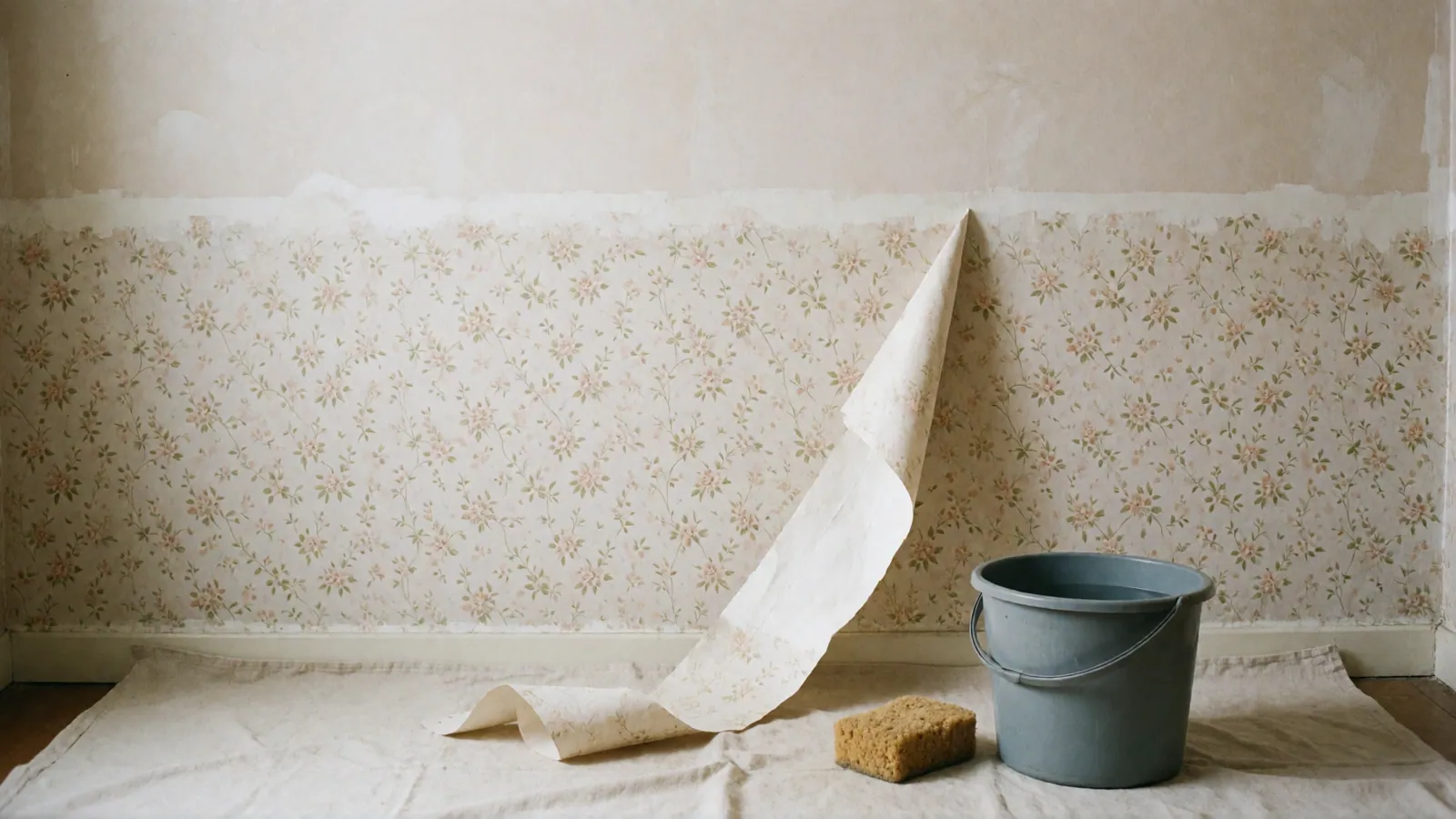
A wall halfway through wallpaper removal: bare pale plaster above, faded floral paper below with one long strip peeling away, a canvas drop cloth on the floor with a gray pail and a sponge on it.

Painting inside

Old wallpaper off, the wall washed and sealed

Scored, soaked and stripped by hand, the old paste washed off, and the wall sealed before it is painted.

  • $70 a painter-hour, plus sales tax
  • Planned in the scope planner
  • Stripped wet, never sanded

AI-generated illustration. Not a real home or business.

Scored, soaked and taken down by hand

Wallpaper comes off the way it went on: with water. The paste under it is a glue that softens when it is wet again, so the whole job is getting water through the paper to the paste. A paper with a printed or vinyl face sheds water, which is why the face is scored first, with a tool that perforates the paper without cutting into the wall beneath.

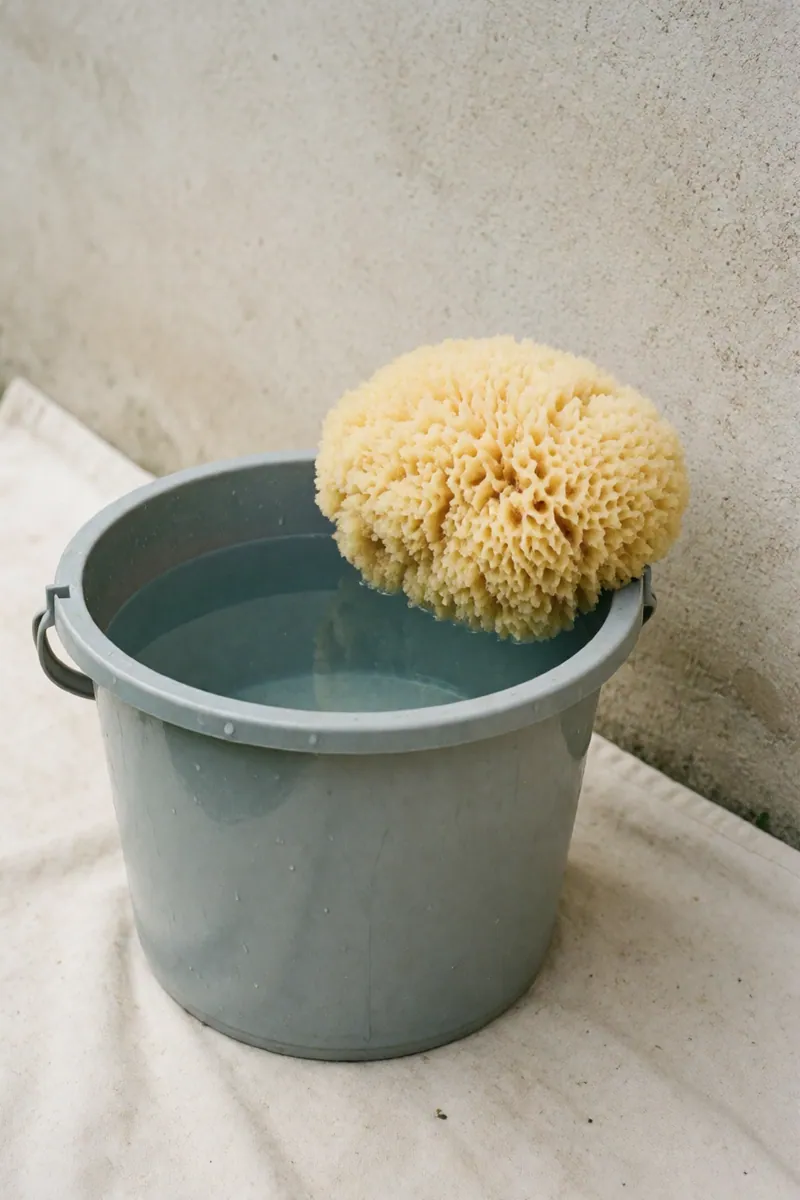
Then it is soaked, with warm water and a sponge, a section at a time, and left long enough for the water to reach the paste. Paper that is ready lets go in long strips; paper that fights is not ready, and pulling harder only tears the surface of the wall under it. Many vinyl papers come apart in two layers: the face peels away dry, and the backing left on the wall is soaked and taken off after it.

It is never sanded off. Sanding grinds the paste and the paper into the plaster, gouges the wall, and in an older home turns whatever paint is under the paper into dust.

  • Stripped wet, never sanded off.
  • The paste washed off before the primer.
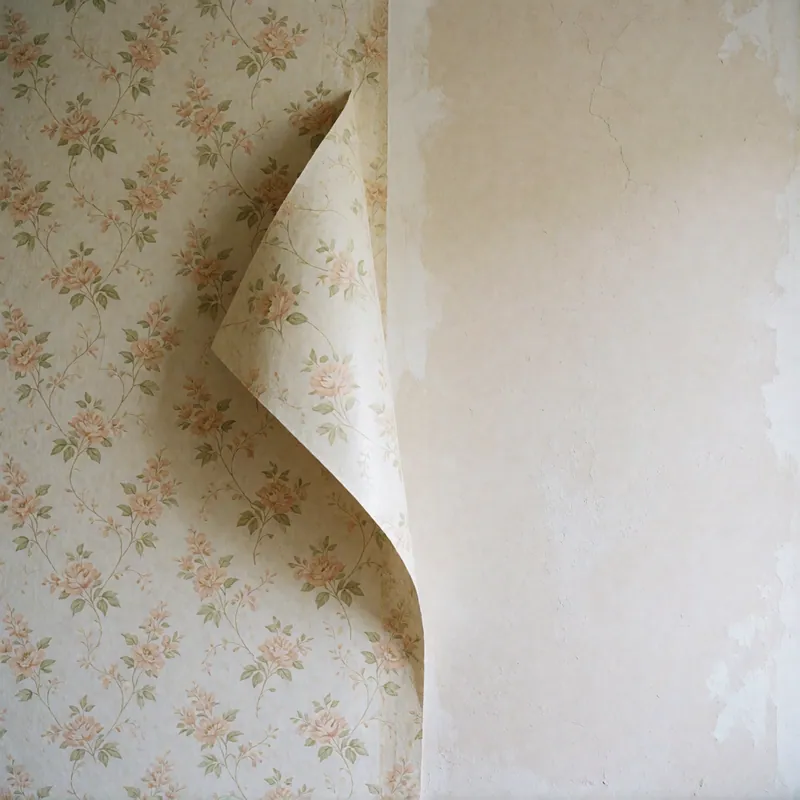
A strip of faded floral wallpaper peeling away from a plaster wall in one long curl.AI-generated illustration. Not a real home or business.

The paste washed off, and the wall sealed

When the last strip is down the wall is not ready. The paste is still on it, a thin film you can feel as a slight tack once it is wet. Paint rolled over paste looks right for a while and then crazes into fine cracks, as the water in the paint softens the glue under it and the glue shrinks again as it dries. So the wall is washed with warm water and a sponge until the tack is gone, rinsed, and left to dry.

Then it is sealed with a primer before anything else touches it. Whatever paste is left in the surface is locked under the primer, and the filling that comes next goes onto a sealed wall instead of into damp plaster.

Under the paper there may be plaster that was painted before it was papered, plaster that never was, or, in a newer building, drywall whose paper face came up with the wallpaper in places. Each is sealed first; the holes and torn spots are filled after, twice, like any other wall.

What the planner counts, and what it does not

The scope planner asks about rooms, their walls and the paint. It has no question about wallpaper, so a range it gives for a papered room counts the painting that follows and not the stripping. How long a paper takes to come down depends on how many layers there are and what the paste was, which nobody knows until the wall has been looked at, so the stripping is counted at the walk-through.

If the wall under the paper turns out to need repair, the work stops at that wall. Loose plaster hidden under old paper is repair work, not prep, and is put right by someone else before it is painted.

One rate for every painter on every working day, counted in whole painter-hours, with no minimum. Sales tax is added on the whole bill, at 8.875%.
The timeBefore sales tax
One painter for an hour$70
One painter for a day of eight hours on site$560

The time is painter-hours: two painters for a day is sixteen of them. It counts the protecting, the preparation, every coat and the clean-up, and is counted in whole hours. There is no minimum.

A large natural sponge resting on the rim of a gray pail of water beside a bare plaster wall.AI-generated illustration. Not a real home or business.

Tobias Lindqvist-Amadi

Doors, trim and wallpaper

Paints the doors and the trim, and takes old wallpaper down.

Tobias takes the doors off their hinges and paints them flat when the building allows it.

Tobias scores old wallpaper and soaks it, and never sands it off.

The picture is a still of the tools, not a portrait.
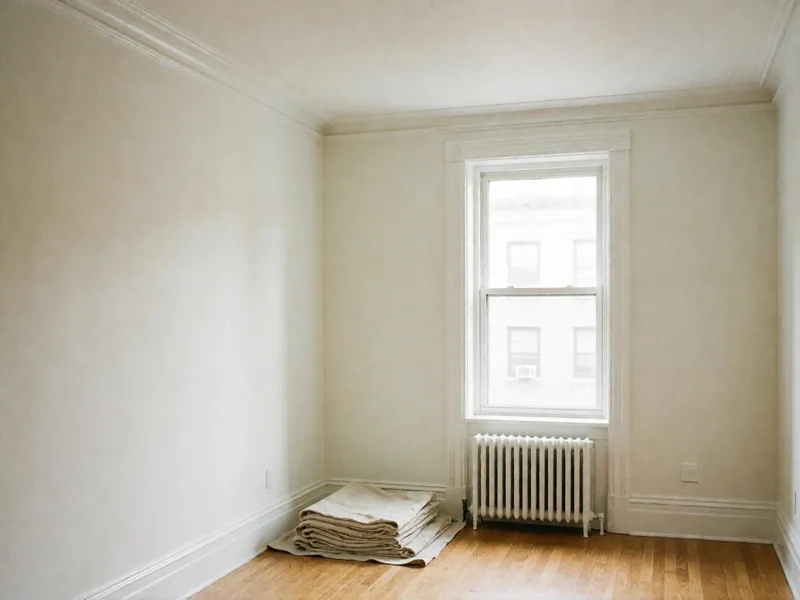
Related services

Plan your painting

Try the scope planner: a crew, painter-hours and working days at the published rate, in about two minutes. Sending it to us books nothing.