The journal
Painting a prewar apartment
Plaster that cracks along the lath, moldings filled with eighty years of paint, radiators, windows that should still open, and lead.
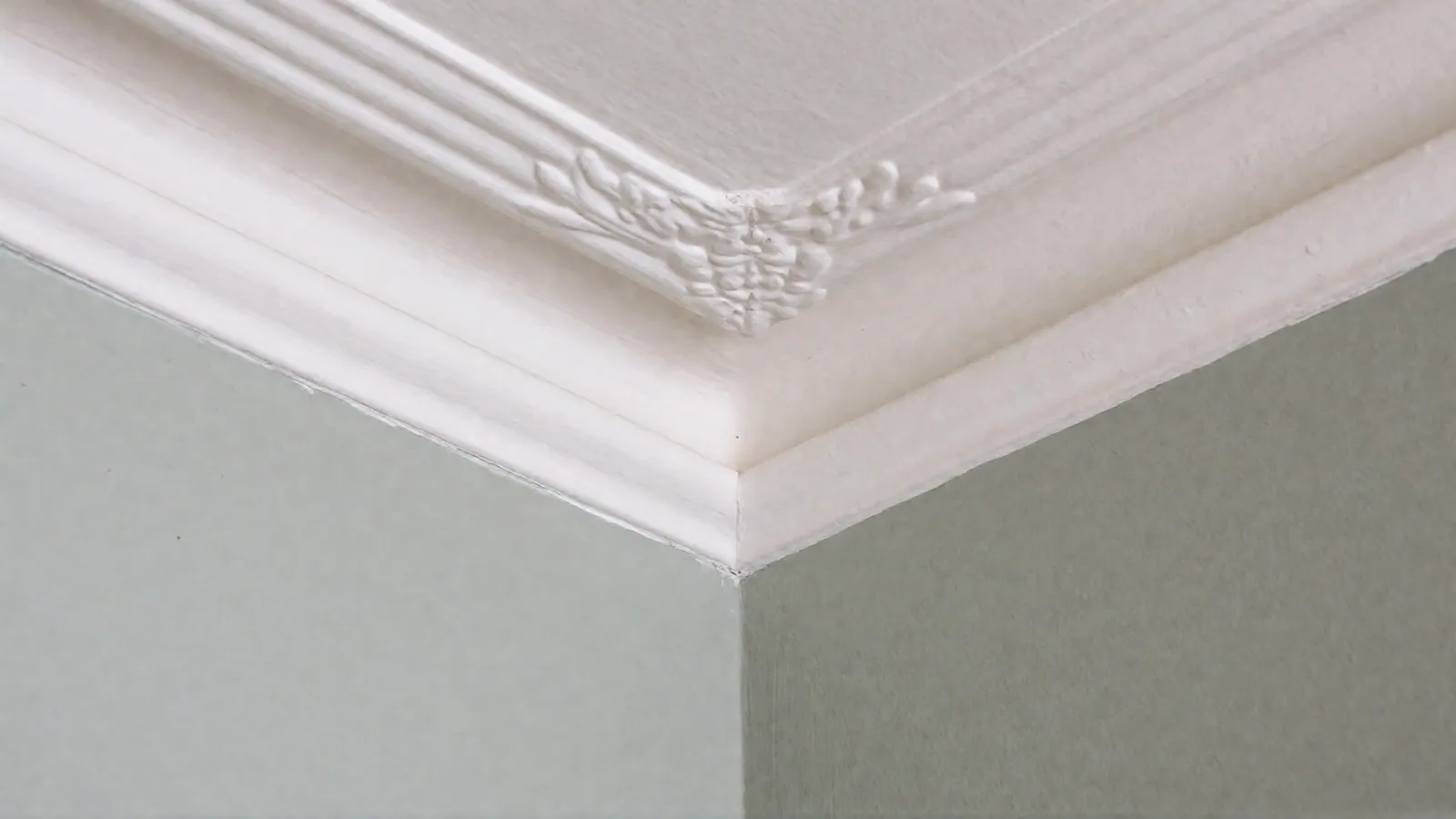
AI-generated illustration. Not a real home or business.
Plaster, not drywall
A prewar Queens apartment is usually plaster: a coat or two of it over wood or metal lath, troweled hard and smooth, on walls that have been painted many times since. It is a better surface than drywall in most ways, harder, quieter and truer, but it moves. The building settles, the heat comes on and goes off every winter, and the plaster answers with fine cracks that follow the lath, run out from the corners of doors and windows, and open along the line where a wall meets the ceiling.
Most of those cracks are hairlines, and they are filled rather than fought. A hairline is opened slightly so that the filler has something to hold, filled, left to dry, and filled again. Ilse Moraes-Quaye fills, sands and spot-primes, and sets up the plastic in older homes. She fills a crack twice, because filler shrinks as it dries. A crack that has moved for decades may move again; filling it properly and spot-priming the patch is what keeps it from showing through the new paint.
What matters most is telling a crack in sound plaster from plaster that has let go. Look at them in low side light, from a window or a flashlight held flat to the wall. Then press gently beside the crack. Sound plaster is hard everywhere; plaster that has come away from its lath gives a little, sounds hollow when tapped, or bulges. That is repair work, not preparation, and it comes before the painter.
Moldings under layers of old paint
Crown moldings, picture rails, door casings and baseboards in a prewar apartment carry every coat anyone ever put on them, and the oldest coats are the ones most likely to contain lead. The fine detail of a molding fills up first, so a sharp profile turns soft and round under its paint. The temptation is to strip it back to the wood. In a home built before 1978 that would mean heat or power tools, which this company does not use there, so a molding is cleaned, loose paint is taken off wet and by hand, the bare spots are primed, and new paint goes on in coats thin enough not to add to the problem.
Every edge of a molding is cut in by brush. Casimir Oduya-Hart leads the crews in apartments and houses across Queens. He paints the ceiling first and the trim last, every time. On a prewar ceiling that order matters more than usual: the ceilings are high, the cut line along the top of a crown molding is long, and anything that drips from above lands on work already done. The planner adds the extra wall when you answer "Nine to ten feet, as many prewar buildings have".
Windows that still open
The trim page says one thing about windows: “Windows painted so they still open.” It sounds like the least a painter could do, and it is the part of a prewar job most often done badly.
A double-hung window has two sashes that slide past each other in channels, and paint in the wrong place glues them together: on the edges of the sashes, in the channels, on the strips that keep the sashes apart, or across the joint where a sash meets its frame. So the sashes are painted on their faces and their room-side edges, the channels and the parting strips are left clean, and each sash is slid up and down while the paint is still soft and again once it has set.
Radiators
Cast-iron radiators sit under many prewar windows, and they decide when the walls behind them can be painted. Paint brushed onto warm iron skins over before it can level, and blisters when the heat comes back up; paint rolled onto the wall behind a hot radiator dries before it can be laid off, and shows every lap. So painting a radiator, or the wall behind one, is done with the heat off and the iron cold, which in the heating season means a word with the super before the first day.
The flaking paint the planner's "Fair" answer mentions is most often found here and at the window above, where heat and condensation work at the old coats every winter. It is scraped back to a sound edge, by hand, before anything else is done to the wall.
Lead, in an older home
Every home built before 1978 is planned as if its old paint contains lead, as the federal rule assumes. That changes how the preparation is done, not whether it is done:
A home built before 1978 is painted lead-safe: plastic sheeting over the floor and across the doorway, the room emptied or its contents sealed, the prep done wet and by hand, no open flame, no heat gun and no power sanding, a HEPA vacuum and a wet wipe at the end, and each windowsill and floor checked against a cleaning card. It takes longer, and the scope planner counts the time. Before the work, the owner, and an adult who lives there if it is someone else, gets the federal pamphlet about it, "Renovate Right".
The whole practice, step by step, is on the page about older homes and lead paint. In an older apartment building there is one more question, and the planner asks it only where it can matter: whether a young child lives in the apartment or spends a lot of time there. If one does, the work is no longer a painter's:
In New York City, repainting a room in an apartment building or a rented home built before 1960, where a child under six lives or spends ten hours a week, counts as disturbing lead paint. Above a hundred square feet a room it must be done by a firm certified for lead abatement, with a notice to the Health Department ten days before and a dust test afterwards by an independent tester. The building owner has these duties. This company holds no such certification, so it does not take that work: ask the owner.
Where a sprayed texture was added later over an old plaster ceiling, it is left out of the plan until it has been tested, for the reasons its own page gives.
A prewar one-bedroom, worked out
One of the worked examples is a prewar one-bedroom, trim and doors included: a 1930s walk-up in Sunnyside, with the walls in fair shape and a new color. The range carries the lead-safe time for every room:
A worked example: a planning range
A prewar one-bedroom, trim and doors included A 1930s walk-up in Sunnyside
The sixteen answers behind it
- Bedrooms
- 1
- Living or dining rooms
- 1
- Kitchens
- 1
- Bathrooms
- 1
- Hallways and entries
- 1
- Where is it?
- Woodside or a neighborhood next to it
- How big are the rooms?
- About average for New York
- How high are the ceilings?
- Nine to ten feet, as many prewar buildings have
- What are we painting in those rooms?
- Walls, ceilings and trim: baseboards, windows and the inside of the closets
- Is any of the ceilings textured, sprayed-on or "popcorn"?
- No, the ceilings are smooth
- And the doors?
- The doors of these rooms, both sides and the frames
- What shape are the walls in?
- Fair: cracks, dents, some flaking at the windows or radiators
- And the color?
- A new color of about the same depth
- How furnished are the rooms?
- Furnished, as most homes are
- When was the building built?
- Before 1960
- What kind of home is it?
- An apartment in a building with three or more apartments (a co-op or condo included)
- Paintersby the size of the jobTwo painters
- Painter-hoursthe work, counted in whole hours61 to 86 painter-hours
- Working days on sitewith this crew4 to 5½ working days
- The ratethe same on every working day$70 a painter-hour
- The time, at the ratethe painter-hours at the rate$4,270.00 to $6,020.00
- The paint, roughlytwo coats, rounded up to the gallon9 gallons of wall paint and 4 of ceiling paint
- Paintby the gallon, and the trim enamel by the item$1,063.00
- Plastic, tape, filler and the restfive rooms together, the lead-safe sheeting included$350.00
- Before sales taxthe time, the paint and the materials$5,683.00 to $7,433.00
- Sales tax, 8.875%on the whole bill$504.37 to $659.68
- The rangea planning range, not an estimate$6,187.37 to $8,092.68
- Built before 1978: planned lead-safe. It takes longer, and the scope planner counts the time.
The scope planner's answer to these questions, at the published rate and prices. A planning range is not an estimate or a quote, and nothing on this site is an offer of work.
None of this makes a prewar apartment hard to paint well. It makes it slow to paint well, which is why the time is counted rather than guessed, and why the walk-through looks at the plaster before anybody talks about color.
Plan your painting
Try the scope planner: a crew, painter-hours and working days at the published rate, in about two minutes. Sending it to us books nothing.